
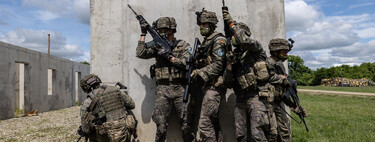
A paradox is unfolding in the ongoing war in Europe . While Ukraine has successfully worn down Russian artillery , another growing threat has emerged: the escalating prowess of drones . Once a front-runner in combat drone technology, Kiev now finds itself in a race against time as Moscow aims to not only catch up but decisively surpass its capabilities.
So, how is this happening? The answer lies in the arrival of thousands of North Koreans .
Drones, Workers, and An Alliance. The strategic partnership between Russia and North Korea has evolved from marginal cooperation to a structural axis , significantly impacting the dynamics of the conflict in Ukraine and shaping security architecture in East Asia .
According to diplomatic sources cited by various Japanese and Western media outlets, Pyongyang has begun sending an army of up to 25,000 workers to the Alabuga Special Economic Zone in the Russian Republic of Tatarstan . The goal: to massively bolster the industrial production of Shahed drones , Iranian in origin, which Moscow uses as its primary saturating weapon in Ukraine.
But there’s more. This collaboration also entails knowledge transfer , training in the use of unmanned systems , and a reconstruction component aimed at areas of combat, like Kursk , which has sustained significant damage since the Ukrainian offensive of August 2024 .
The influx of North Korean personnel not only addresses the growing shortage of skilled labor in Russia but also helps solidify a political and military axis based on converging interests against the West .
Kamikaze Tactics En Masse. The Alabuga factory, now at the heart of Russia’s Shahed drone program, currently produces around 2,000 units per month , with aims to ramp up production to 5,000 thanks to this new workforce. Satellite images have detected extensive industrial expansion, including the construction of collective dormitories designed to accommodate hundreds of workers, following a model of intensive and permanent occupation.
This logistical reinforcement aims to ensure the continuity of production even under direct threat, as the factory has repeatedly endured Ukrainian drone attacks . For instance, on June 15 , a drone laden with explosives attempted to bomb the site using a previously unseen tactic.
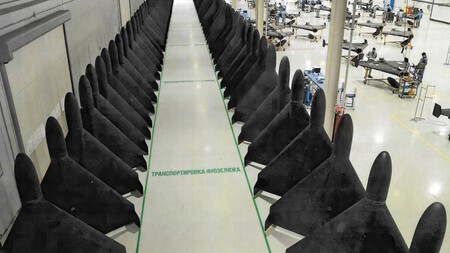
Shahed 136 Factory in Russia
A Key Drone. The necessity for Russia to maintain pressure on Ukrainian defenses has turned the Shahed drones into the backbone of its aerial offensive. These vehicles are modified to carry larger explosive payloads and incorporate features that make them harder to intercept.
The massive use of drones in nighttime attacks, sometimes exceeding 100 drones per night , forces Ukraine to exhaust its anti-aircraft ammunition reserves rapidly, progressively weakening its defense capabilities.
Military Logic for Reconstruction. The deployment of North Korean workers is not confined to weapons production. Following a recent visit to Pyongyang, Russian Defense Minister Sergei Shoigu confirmed the arrival of approximately 1,000 North Korean engineers and at least 5,000 civilian workers to participate in the reconstruction of infrastructure devastated in Kursk . This region witnessed extensive damage after being invaded by Ukrainian forces and subsequently reclaimed by Russia.
Moscow regards this reconstruction as crucial for both national morale and the logistical sustainability of the front. Analysts have noted that the Kremlin perceives Central Asian migrants as politically unstable and vulnerable to recruitment by Western or Ukrainian intelligence services, prompting the seek for loyal migrants like their North Korean counterparts.
A Hybrid Workforce. According to Ukrainian General Kyrylo Budanov , some of these workers might sign contracts with the Russian Defense Ministry, forming unofficial paramilitary units of Russian nationality with North Korean origins. This development would mark a significant step in blending foreign labor with the regular military structure.
Reverse Technological Transfer. This partnership also has significant geopolitical implications. Budanov mentions that Russia is actively assisting North Korea in enhancing the accuracy of its KN-23 ballistic missiles , modernizing its long-range air-to-air missiles, and strengthening the capabilities of its nuclear submarines , particularly concerning underwater missile launches.
Strategic Evolution. In exchange for labor and logistical cooperation, Moscow is solidifying a North Korean offensive capability that could alter the military balance on the Korean Peninsula. As mentioned earlier, Pyongyang is developing, with Russian assistance, the infrastructure necessary to produce local versions of the Shahed drones . This rollout would grant Kim Jong-un’s regime an arsenal capable of overwhelming South Korea’s air defenses through massive simultaneous attacks .
This transformation signifies a strategic evolution for a country that was on the periphery of major global military production chains just a few years ago, now emerging as a significant player in asymmetric technological warfare .
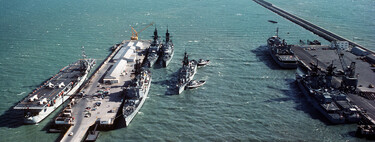
A New World Order. Ultimately, the image of a vast factory where thousands of Russians and North Koreans collaborate on an assembly line for Shahed drones elevates the Moscow-Pyongyang alliance to new heights. This situation also marks the emergence of an authoritarian axis that not only challenges the military status quo but also poses a profound challenge to the existing system of Western alliances .
It is undeniable that if Russia stabilizes its front through mass-produced drones with North Korean assistance while simultaneously strengthening Pyongyang’s strategic capabilities in Asia, the global security architecture will experience a dangerous mutation. This situation transcends mere resource exchange for services; it represents the formation of a network of coordinated interests with a shared narrative against the United States , Europe , and their Asian allies.
Image | KNCA, X
In summary, while the ongoing conflict poses challenges at every turn, the alliance between Moscow and Pyongyang represents a potent combination of military, economic, and strategic imperatives, reshaping the landscape of modern warfare and international relations.