

Navigating Fashion Trends with AI: The Zhiyi Tech Revolution
In the competitive fashion industry , hitting the right trends is crucial, making the difference between a successful sale and racks of unsold clothing. A report from the South China Morning Post highlights how a Chinese startup is assisting brands such as Nike and GAP in making better decisions by leveraging artificial intelligence . The technology analyzes data from social media, online stores, and consumer patterns to predict future fashion trends even before they gain traction on platforms like TikTok .
The Company Behind the Technology
Founded in 2018 in Hangzhou , Zhiyi Tech is situated in one of China’s leading tech hubs, also home to the giant Alibaba . The company specializes in providing AI-driven solutions that help clothing brands forecast which trends will be bestsellers. In 2022 , Zhiyi Tech raised $100 million across several funding rounds, and its notable clients now include Nike and GAP .
Leading Technology in Fashion Forecasting
Zhiyi’s flagship software, simply named Zhiyi , operates on extensive data analysis using artificial intelligence. The company boasts over 1 billion images of materials and 100 billion patterns of garments in its database. It evaluates which designs are selling well in stores, tracks social media trends, and monitors competitors’ sales. With this wealth of data, and utilizing deep-learning and AI recognition algorithms , Zhiyi claims it can detect shifts in the fashion industry and predict trends, enabling businesses to design and plan more efficiently.
A Local Success Story
The Chinese clothing chain Urban Revivo is one of Zhiyi Technology’s key clients, having collaborated since 2020 . According to Zheng Zeyu , CEO of Zhiyi, Urban Revivo improved its sell-through rate (the ratio of stock sold to stock received) from 60% to 80% in just three years. Additionally, the brand enhanced its chances of creating highly successful products by 5% . Given that Urban Revivo launches over 100,000 designs each year, this means approximately 5,000 exceptionally successful designs .
From China to the Global Market
Initially focused on the domestic market, Zhiyi started its expansion three years ago with a tool called Overseas Exploration . This initiative aimed to analyze trends from around the world while still serving Chinese companies. Trendscope , one of the first products targeting international clients, was launched last year. This tool tracks global sales platforms like Amazon , Temu , or Shein , in addition to social networks like Instagram and TikTok . Major international clients such as GAP and Nike utilize Zhiyi’s insights for crucial design decisions, including color choices for sportswear and the style of outdoor footwear.
AI in Design: A Game Changer
In addition to predictive analytics, Zhiyi has introduced a generative AI tool named Fashion Diffusion+ . This innovative tool creates high-quality designs and images from mood boards or sketches. Users can register for a free trial of this tool, experiencing its ability to transform a sketch into a polished render. While the results are impressive, reflecting well on details like pockets and zippers, there’s potential for improvement when compared to other AI platforms like ChatGPT .
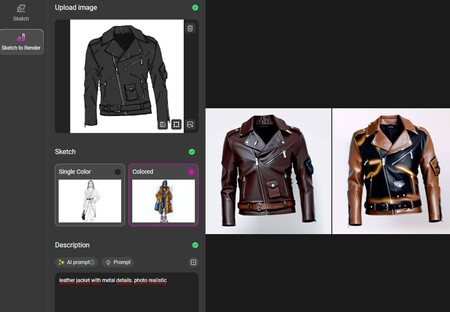
Trial with Fashion Diffusion+.
The tool aspires to become a type of ChatGPT for fashion design, enabling users to create designs based on natural language prompts without needing detailed images or drawings to start. An enhanced version of the tool is expected to be launched soon, particularly targeting international clients, although current iterations reveal that there is still room for growth.
AI Adoption in the Fashion Industry
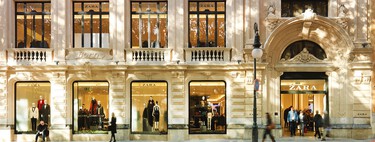
The application of AI in fashion isn’t confined to Zhiyi alone. Companies like Inditex , owner of Zara , have been investing in big data, AI, and analytics since 2018 to enhance their operations. They’ve collaborated with startups like Jetlore to better predict consumer behavior. Likewise, Uniqlo integrates AI throughout its processes—from design to supply chain management—using data analytics to detect new trends and adapt accordingly. This technological approach increasingly captures consumer movements in stores to better allocate prime retail space .
As generative AI continues to evolve, its applications span multiple sectors, from predicting marketing trends to shaping the future of finance and healthcare. In a world increasingly driven by data, understanding trends through platforms like Zhiyi Tech may well become the standard in fashion design strategy moving forward.
Image Source: Pixabay