
The Rise of Nuclear Energy: Amazon’s Cascade Project
As the demand for artificial intelligence (AI) surges, so does the electrical demand of data centers. Major technology companies are increasingly exploring energy sources that can sustain 24/7 operations. Among them, Amazon’s new endeavor, the Cascade Advanced Energy Facility , marks a significant innovation in how the digital infrastructure is powered. This project signifies a blend of autonomy and energy security amidst the ongoing AI revolution.
The AI industry is not merely reshaping the labor landscape; it is also significantly stressing the global energy grid. Data centers , which handle millions of operations per second, require an uninterrupted power supply. Traditional renewable energy sources, while eco-friendly, often lack the reliability necessary for these operations. This dilemma has paved the way for a resurgence of nuclear energy , perceived as a robust and carbon-free solution. For corporations like Amazon, the challenge now extends beyond developing advanced algorithms to ensuring a stable energy supply.
Insights into the Cascade Plant
The Cascade Advanced Energy Facility is set to be constructed near Richland, Washington . Collaborating with Energy Northwest and X-energy , Amazon has ambitious goals for this project. The facility aims to serve as a cornerstone in efforts to cut down emissions and provide constant electricity to the vast network supporting Amazon’s global operations.
Cascade will utilize the Xe-100 reactor design, a next-generation modular reactor engineered for enhanced efficiency and safety compared to traditional models. The first phase will contribute 320 MW of power with four small modular reactors (SMRs) , and the plant has the potential to expand to 960 MW by adding up to 12 units. One of the project’s architectural strengths is its modularity, which permits scalable production tailored to demand while occupying significantly less space compared to conventional plants, which can span over 2.5 square kilometers.
A Unique Energy Campus
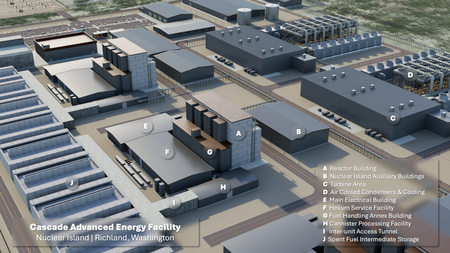
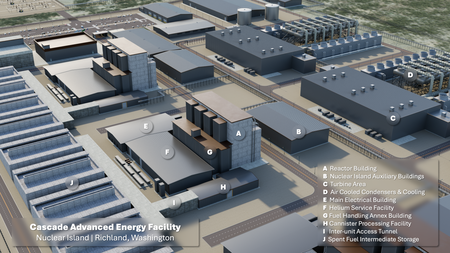
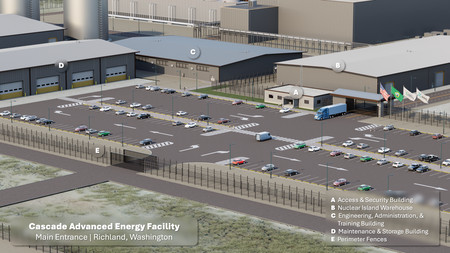
Diverging from traditional nuclear installations, the Cascade project will resemble a compact energy campus. It will feature modular buildings that include reactor units, service areas, turbines, and temporary fuel storage. The projections by X-energy indicate that the complex will resemble an industrial estate , unlike typical, sprawling nuclear facilities. This modular strategy enhances the ability to build in phases while maintaining essential operations, reducing major disruptions during future expansions.
Amazon aims to advance through stages in its Cascade project. The construction is scheduled to begin by the end of this decade, with operational status targeted for the 2030s . These timelines hinge on successful navigation of both the licensing process and industrial development of the Xe-100 reactors.
Job Creation and Community Impact
The Cascade project is projected to generate over 1,000 construction jobs and at least 100 permanent positions in areas like engineering and operations. In line with this initiative, Columbia Basin College will introduce the Energy Learning Center , funded by the Department of Energy . This center will feature a simulator that replicates the control systems of the Xe-100 reactor, equipping local youth with the skills needed for high-demand jobs in the area while strengthening Washington’s green energy transition.
Industry Trends and Future Directions
Amazon’s venture into nuclear energy aligns with a growing trend among technology giants. Other major players like Microsoft and Google are also exploring nuclear options to meet their expanding electricity needs. Microsoft has plans to repurpose an old plant and is actively investigating long-term contracts with nuclear fusion projects . Google, on the other hand, is working with companies to integrate small modular reactors into their energy supply chain. Regardless of the various approaches, there is a collective acknowledgment of the urgent need to power an ever-expanding digital network demanding increasing energy.

While detailed information about Cascade’s operational specifics remains sparse, the project is still in its infancy. Construction timelines and reactor commissioning dates have not yet been finalized. Moreover, it isn’t clear what proportion of the energy produced will support Amazon’s data centers versus what will enter the local grid. The next few years will be crucial in determining whether modular nuclear energy can meet the demands dictated by the rapid growth of artificial intelligence.