
The AI Landscape in 2023
Let’s go back in time for a moment. In mid-2023, artificial intelligence was experiencing a colossal boom, with ChatGPT leading the charge. For many, it represented a passing trend; for others, it was one of the most significant technological disruptions in recent years. OpenAI transitioned from obscurity to prominence by releasing a captivating—if flawed—product that Big Tech companies would typically hesitate to unveil.
In its initial months, ChatGPT operated with minimal safeguards and frequently made errors. Such missteps could have been devastating for a larger tech giant, but a startup could accept the risk and learn from it.
NVIDIA: Facing New Challenges
To rival ChatGPT, companies needed to develop increasingly sophisticated language models. OpenAI quickly followed its GPT-3.5 release with GPT-4 in March 2023. From here on, both old and new players in the sector realized they had to join the race or risk being left behind in what was already shaping up to be the next technological revolution.
All these companies relied heavily on one cornerstone: NVIDIA. Jensen Huang’s firm had established itself as the provider of the best AI-specialized GPUs, particularly the H100 model. The importance of GPUs lies in their ability to handle parallel processing tasks much more efficiently than CPUs, a necessity for modern AI applications.
As competition in generative AI escalated, companies rushed to acquire NVIDIA GPUs and upgrade or establish new data centers. This frantic pace resulted in substantial demand and occasional shortages. For instance, by early 2024, Meta announced that its revamped infrastructure would incorporate 350,000 NVIDIA H100 GPUs, with a processing power equivalent to around 600,000 H100s. By June 2024, NVIDIA emerged as the most valuable public company on the planet.
Despite this success, NVIDIA faces the ongoing challenge of maintaining its market dominance. The company not only excels in hardware but also has a robust software strategy focused on optimizing the CUDA architecture. However, the competitive landscape is intensifying, especially with growing pressure from OpenAI and others.
Amazon and Google’s Strategic Moves
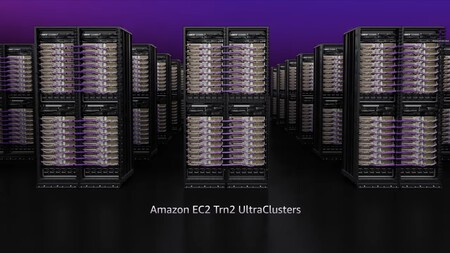
Recently, Amazon unveiled the Trainium3 UltraServer, powered by its latest AI chip, Trainium3, which boasts a 40% increase in energy efficiency compared to its predecessors. The company also shared plans for Trainium4, which will support NVLink Fusion, enabling interoperability with NVIDIA’s high-speed chip technology.
Trainium3 Ultra Cluster
Google, on the other hand, has spent a decade developing TPU chips and is now emphasizing hardware for its Gemini AI initiative. There are even rumors of Meta investing significantly in AI chips from Google, a strategic shift that extends well into the AI industry.
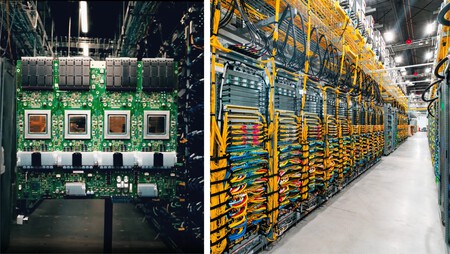
Ironwood by Google
Besides, Meta is also among NVIDIA’s key clients and is testing its own AI chips like the MTIA. OpenAI has even partnered with Broadcom to develop its hardware solutions for data centers.
China’s Influence and a Changing Landscape
In China, the geopolitical climate is unfavorable for NVIDIA. The ongoing trade tensions with the United States have limited its operational capacity in the country, while local competitors like Huawei are advancing their own chip technologies, such as the Ascend 910D and the upcoming Ascend 920 models.

Ultimately, what we are witnessing is a migration of companies that once relied on NVIDIA now forging their own paths. As technological competition sharpens, the imperative for independence stands out among these players.
Images | World Governments Summit | Amazon | Google