
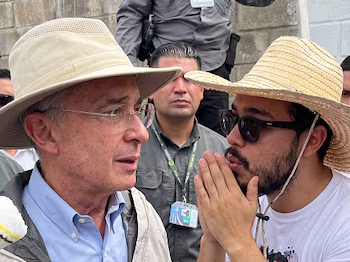
Álvaro Uribe’s Tense Encounter with Protesters
Former President Álvaro Uribe recently found himself at the center of a heated political controversy after an organized protest took place outside his residence in Rionegro, Antioquia. The protest aimed to create a mural in memory of victims of extrajudicial killings, often referred to as “false positives.” This event, called by newly elected congressman Hernán Muriel, drew Uribe’s ire, leading him to label Muriel as an “underhanded coward” for allegedly promoting what he perceived as harassment of his home.
The Context of the Protest
The mural painting was part of a memorial for victims whose families have sought justice for years. Uribe, who was in Medellín engaging in political activities when he learned of the demonstration, expressed deep concern upon arriving at his residence. He stated, “A large crowd of people arrived… I found them here, a large number of people protecting some painters to affect my person in my house. And it seems to me that it is a provocation of violence.”
Uribe’s accusation of provocation was aimed not only at Muriel but also implicated Iván Cepeda, whom he described as a spokesperson for “terrorist groups.” This declaration amplifies the existing political tension in Colombia, particularly as the country approaches a pivotal election.
Understanding the Political Landscape
Uribe claimed that the protest was orchestrated to provoke a violent response from his supporters, thereby attempting to sway public opinion ahead of elections. He made it clear that he would not tolerate any acts against his family, asserting responsibility for any escalation in violence that might occur from the protest.
“This is all encouraged by terrorist groups and their spokesperson, Iván Cepeda. Colombians, this is a prelude to the Cepeda Government,” Uribe proclaimed, further fueling the political divide in the country. His statements resonate with his supporters, who view him as a steadfast defender of their values amid accusations of human rights abuses.
The Response from Hernán Muriel
In stark contrast, Congressman Hernán Muriel defended the protest, characterizing it as an essential act of memory and art. He challenged Uribe’s narrative, asking, “Do you really want to repress these ladies who are praising the memory of the victims and the searching mothers?” Muriel condemned Uribe for attempting to thwart acts that honor the memory of those lost to violence.
Muriel led the protesters who strategically placed themselves 300 meters from Uribe’s home, advocating for their right to peacefully demonstrate. He called upon President Gustavo Petro to intervene, urging respect for their constitutional rights to free expression.
Escalating Tensions and Public Reactions
The situation escalated further when Uribe’s son, Jerónimo Uribe Moreno, became involved, prompting verbal and physical confrontations between supporters and opponents. The unrest underscored the volatility of Colombian politics as it faces polarization ahead of the elections.
Former President Uribe’s remarks—“They have to kill me first than to come and mistreat my family or come to my house”—illustrate the high stakes and deep divisions in Colombian politics today. As tensions rise and political positioning intensifies, the ramifications of this episode could shape the upcoming electoral landscape, drawing sharp lines between supporters and detractors.
Conclusion
The confrontation outside Uribe’s residence serves as a microcosm of the broader struggles in Colombian politics—where protests, accusations, and political moves intertwine. As both sides double down on their positions, the nation watches closely, anticipating how these events will influence the political narrative and election outcomes in the near future.