
The Quest for Alternative Energy
Countries around the world are turning to their unique geographical features to tap into alternative energy sources. While Spain harnesses the sun and wind, and Japan exploits ocean waves, Iceland has recognized its treasure: volcanoes. The full potential of geothermal energy remains largely untapped, primarily because scientists struggle to understand how magma chambers operate. Traditional studies on lavas from volcanic eruptions often provide limited data, as eruptive events release critical information rapidly and chaotically.
The Game-Changing Incident
An unexpected breakthrough came in 2009 during the Iceland Deep Drilling Project, where a drill unexpectedly struck live magma at a depth of just 2,104 meters within the Krafla volcanic field. What started as a mishap transformed into a groundbreaking geological experiment, opening doors to possible geothermal energy exploitation.
The Remarkable Discovery
Upon making contact with the magma, the cooling drilling fluids caused the molten material to crystallize rapidly, producing fragments of volcanic glass. This volcanic glass is invaluable for scientific analysis, as it enables researchers to gather data that is usually lost during explosive volcanic eruptions.
Significance of the Findings
A recent study conducted by Janine Birnbaum’s team at Ludwig-Maximilians-Universität München revealed promising insights. Despite concerns over rapid cooling distorting chemical structures, the analysis indicated that the magma was saturated with volatiles under lithostatic pressure, suggesting it harbored immense energy and gas resources. This is exciting because it confirms two key points: this magma contains more usable energy than previously believed, and it can be approached in a controlled manner without the risk of explosion.
The Path to Geothermal Revolution
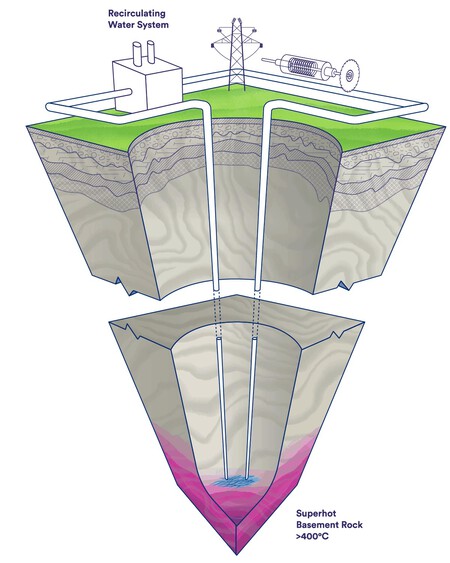
This groundbreaking research validates the concept of Magma-enhanced Geothermal Systems, which aim to extract heat directly from proximity to magmatic bodies or superhot rocks exceeding 374 °C. Under these conditions, energy transport capacity is predicted to be five to ten times greater than traditional geothermal sources, according to the Clean Air Task Force.
The Krafla Magma Testbed Project
The Krafla Magma Testbed (KMT), initiated in 2014, aims to capitalize on the insights from this incident. By developing a robust mathematical model to predict magma behavior during drilling, the project strives to enhance safety protocols for this energy source. The research also allows for the exploration of high-temperature volcanic regions, where nearly 30% of Iceland’s electricity is already derived from geothermal sources.
Innovative Methodology
The KMT employs the technique of “quenching,” rapidly cooling magma samples to assess their water content, carbon dioxide levels, and the structure of vapor bubbles formed during cooling. Numerical simulations are built from these measurements, shedding light on the behavior of bubbles at various temperatures and pressures. This critical data will help design wells for future drilling activities.
Challenges Ahead
Despite the successful model and peer-reviewed research, significant engineering challenges remain. The technical feasibility of drilling into magma at an industrial scale is still unresolved. Specialized materials and sensors capable of enduring extreme temperatures and corrosive environments are paramount. Furthermore, geographical limitations pose obstacles, as this technique is most applicable in rift zones where magma can be accessed at depths of less than five kilometers.
Conclusion
Iceland’s journey in geothermal energy production stands as a beacon of hope for sustainable energy solutions worldwide. By unlocking the secrets of magma and advancing technologies in geothermal extraction, Iceland could lead the charge toward a future dominated by renewable energy.