
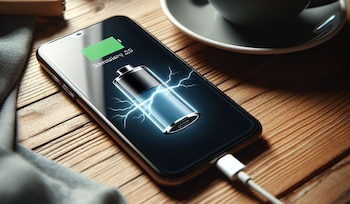
In recent years, fast charging has emerged as one of the most sought-after features in mobile technology. This capability allows users to recover a significant amount of battery power in just a few minutes, transforming the way we manage our devices throughout the day. However, while this technology offers convenience, it also poses certain risks, especially related to the heat generated during the charging process, which can adversely affect battery life over time.
The underlying principle of fast charging operates on the concept of watts (W), calculated by multiplying volts by amps . Essentially, the more volts and amps a device can receive, the greater the power, and consequently, the quicker the energy is transferred to the battery.
Experts often liken this process to traffic flow on a highway: amps are akin to the number of lanes, and volts represent the width of those lanes. The more lanes and wider the lanes, the more vehicles (energy) can pass through to charge the phone effectively.
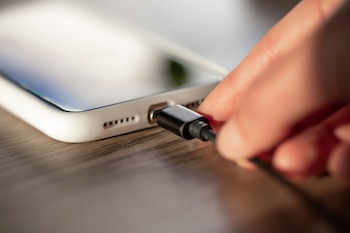
Historically, any charging speed above 5 W was classified as fast charging . Today, however, the average standard has surged to 30 W for most devices. In response to this demand, manufacturers have created various systems to enhance energy delivery. Companies like Qualcomm and MediaTek have established global standards, while some brands have achieved charging speeds of 120 W , 200 W , or even 240 W through innovative designs that divide energy flows across multiple batteries, drastically reducing charging time.
Heat remains the principal adversary of lithium-ion batteries. While conventional charging naturally increases battery temperature, fast charging amplifies this effect, resulting in accelerated wear. To mitigate this issue, certain manufacturers have incorporated cooling systems either in the chargers or built-in temperature control mechanisms within the device itself.
Despite these advancements, specialists urge users to utilize fast charging only when necessary, such as during brief stops, and to opt for slower charging overnight to safeguard longer battery life. Additionally, the increased power draw associated with fast charging may elevate the risk of incompatibility when using non-original chargers and cables. Utilizing uncertified accessories can compromise the safety features of devices, potentially leading to incorrect current supplies, short circuits , or even severe internal damage.
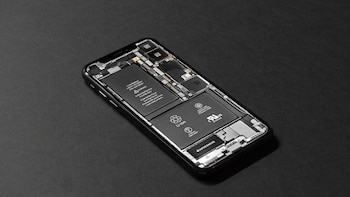
It’s also crucial to monitor energy consumption . Although higher power charging can lead to increased electricity costs, studies show that the economic impact is minimal, averaging between 1.5 and 3 euros annually. This translates to just a few cents per month. The real concern surrounding fast charging lies not in its financial implications but in its technical challenges, with heat remaining the biggest hurdle to maintaining battery integrity.
With every new smartphone generation, manufacturers are pioneering even more powerful charging systems, claiming to retain 80% of battery life even after hundreds of cycles. While such claims often come with asterisks, there is no denying the continuous innovation aimed at reducing charging times without compromising safety or battery longevity.
To extend the lifespan of cell phone batteries , various practices can be adopted. For instance, setting the screen brightness to the lowest possible level or utilizing automatic brightness adjustments can help conserve battery power. Closing background applications and disabling functions like Bluetooth or location services when they are not in use also contributes to energy savings.
Additionally, activating the battery saving mode, offered by most devices, can significantly enhance battery longevity. Limiting push notifications, avoiding animated wallpapers, and reducing screen timeout duration are other effective strategies to help conserve charge for extended periods.
In conclusion, while fast charging provides undeniable convenience, users must balance this benefit with the awareness of its potential drawbacks. Understanding how this technology works, alongside adopting best practices for battery maintenance, can lead to a more sustainable and efficient experience with mobile devices. Embracing these insights not only optimizes battery performance over time but ultimately contributes to a more responsible usage of technology in our daily lives.