
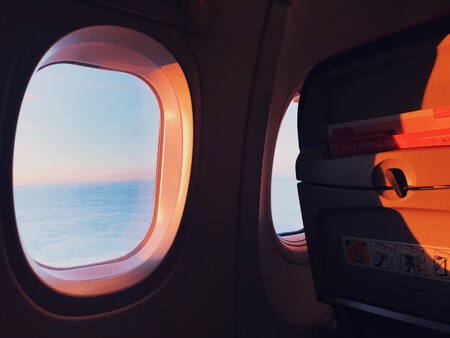
The Intriguing Design of Airplane Windows
When stepping onto an airplane, it’s easy to take the oval-shaped windows for granted. This distinct design choice, however, has profound implications for safety and structural integrity. To fully grasp why airplane windows are circular, we need to delve into history, particularly focusing on two tragic plane crashes that shaped aviation safety regulations.
The Shift from Rectangular to Circular Windows
During the early days of aviation, planes featured rectangular windows similar to those found in homes. As commercial air travel surged in the 1950s, airlines began operating at greater altitudes. This transition not only led to significant fuel efficiencies but also provided a smoother flying experience with reduced turbulence. However, this advancement required manufacturers to rethink cabin design.
The Necessity of Pressurization
To fly at higher altitudes, aircraft cabins had to be pressurized to ensure pilots and passengers could breathe comfortably. A cylindrical cabin shape is essential for maintaining this pressure difference between the inside and outside air, as it allows for a more uniform distribution of stress across the aircraft material. Flat surfaces simply don’t withstand the stress of high-altitude pressure changes as effectively.
The Fatal Flaws of Square Windows
The shortcomings of square windows became alarmingly evident in 1954, when two fatal accidents resulted in the loss of 56 lives. The fuselages of these planes disintegrated due to a design flaw—square windows concentrated cabin pressure at their corners, leading to catastrophic failure. This flaw became a wake-up call for the aviation industry, highlighting the dire need for a shift to circular windows.
Circular Windows and Stress Distribution
Circles are inherently stronger shapes, which allows stress to distribute evenly across a rounded window. This means that any tension flows smoothly through the material, significantly reducing the chance of breakage. In contrast, sharp corners in square windows can intensify stress levels, making them more prone to failure. This principle applies not only to windows but also to cabin and cargo doors in modern aircraft.
Enhanced Passenger Safety and Comfort
Designing with rounded edges also adheres to a principle known as “deletalization,” which minimizes sharp edges that could potentially injure passengers. As noted by Anthony Harcup, director of the design firm Teague, every part of an airplane is carefully designed to ensure passenger safety, particularly in emergencies.
Advancements in Window Materials
Modern airplane windows also exhibit significant advancements in materials. Contrary to popular belief, airplane windows are made from acrylic rather than glass. Acrylic is more durable, which is crucial given the demanding conditions at high altitudes. Each window consists of three layers for added safety; the inner layer acts as a protective barrier, while the outer layer provides structural reinforcement.
The Importance of the Pressure-Equalizing Hole
A smaller, often unnoticed feature of airplane windows is the small hole present in the second layer. This hole plays a vital role in equalizing pressure between the interior and exterior windows while regulating humidity levels to prevent fogging. Such small design considerations exemplify the meticulous science that goes into airplane construction.
In summary, the transition to circular windows in aviation was a critical evolution driven by safety requirements and engineering principles. The lessons learned from past accidents have fueled innovations that ensure safer air travel for everyone.
Images | Unsplash