
The Retirement of the Airbus Beluga: A Unique Chapter in Aviation History
Few commercial airplanes have made their mark on the aviation industry like the Airbus Beluga. With its whale-like snout, the Beluga’s distinctive shape is not only iconic but also functional. Designed primarily for the transportation of large aircraft components, this freighter has played an essential role in Airbus’s logistics, ensuring that the manufacturer maintains its production schedule.
An Evolving Cargo Carrier
The Beluga’s capabilities were impressive: it could carry a payload of 47 tons, allowing for the transport of items up to 30 meters long. Initially, the A300-600ST variant could only accommodate one aircraft wing per trip. However, advancements led to the introduction of the BelugaXL, which enhanced capacity to transport two wings simultaneously. This shift simplified logistics significantly, crucial for the transporting of critical parts from locations like Broughton, UK, to assembly plants in Toulouse, France, and Hamburg, Germany.
Second Life as Air Cargo
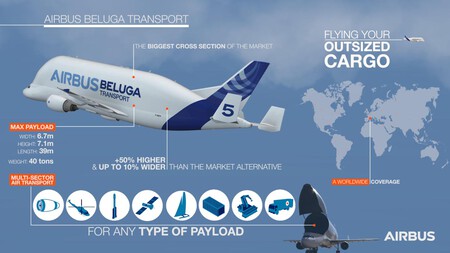
Although the BelugaSTs were designed for about 40,000 flight hours, many of these aircraft retired early by around 2022 still had a remaining life of up to 20 years. Airbus capitalized on this potential by transforming them into cargo planes through the newly established Airbus Beluga Transport (AiBT). This initiative aimed to fill a niche market for high-capacity air delivery, targeting sectors that require the transport of satellites, aircraft engines, and heavy machinery. The timing seemed perfect, especially since traditional heavy-lift aircraft like the Antonov An-124 were less available due to geopolitical conflicts.
Challenges and Closure
Despite initial optimism, the AiBT cargo airline struggled to find demand and was temporarily closed within a year of operation. The market reality failed to align with projections, highlighting the challenges of adapting older aircraft for new roles.
Current Status of the Belugas
Of the original five BelugaSTs, only one remains operational, marked as F-GSTC “3.” The others have been retired or are marked for new roles. For instance, F-GSTF “5” will serve as an interactive classroom for STEM education in the UK, ensuring that even in retirement, the Beluga’s legacy continues. Unfortunately, similar to other iconic aircraft like the Super Guppy, opportunities for preservation seem limited, with Spain’s failure to retain historical models serving as a stark reminder of aviation heritage being at risk.
Aviation Legacy at a Crossroads
As the aerospace industry moves forward, the story of the Airbus Beluga serves as a compelling chapter in aviation history. While it may be retiring from commercial service, the lessons learned and the innovations spurred by this unique aircraft will undoubtedly influence future designs and logistical strategies.