

The AI App Surge: Why So Many Remain Untouched
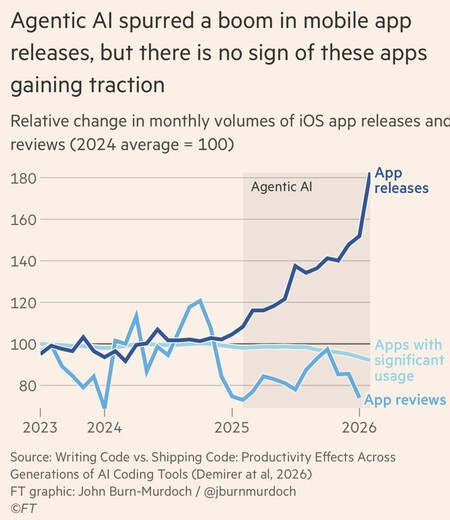
A new research study from MIT analyzed the activity of thousands of developers after adopting AI agents like Claude Code and Codex. The findings reveal a “funnel effect”: while many developers are eager to experiment with AI in coding, the majority of projects do not culminate in actual software releases. An influx of apps is seen in application stores, yet user interest remains alarmingly low.
Hotfix Blocks Everything
The introduction of tools like Claude Code offers a liberating feeling for novice programmers, making it seem like they can build anything. However, many projects stall in their development phases. Manual quality control, code reviews, and deployment processes become significant bottlenecks, often executed by individuals without the necessary technical background. This disconnect hinders even promising projects from reaching fruition.
Producing More Is Not Selling More
According to the MIT study led by economics professor Mert Demirer, the sheer volume of mobile applications on platforms like the App Store and Google Play has surged due to AI’s ease of use. Yet, consumer behavior has not reflected this rise; download and usage rates remain stagnant. Essentially, while the number of apps has increased substantially, user engagement has not kept pace.
App Failure
Most of the new software products emerging from these AI tools encounter failure when trying to capture an audience. The efficiency of app development does not necessarily correlate to actual user needs or market demand. A wealth of applications does not equate to genuine utility, leaving many users overwhelmed by choices yet underwhelmed by quality.
The Code Surpasses Us
Linus Torvalds has remarked on the utility of AI in programming, emphasizing that while it can boost productivity, it also presents maintenance challenges. The rapid production of code, coupled with insufficient avenues for thorough reviews, places overwhelming demands on programmers. The result is often unmanageable codebases that are likely to deteriorate over time.
Costs Are Skyrocketing
The financial implications of using AI agents for coding have raised concerns among major companies like Uber and Microsoft. The high token consumption of these AI tools necessitates a reevaluation of strategies. A hybrid model is now being adopted, where AI cloud agents oversee project planning, while simpler, cost-effective coding alternatives are utilized for actual development.
Remembering the Industrial Revolution
Demirer draws parallels with the industrial revolution, where initial advancements in technology did not lead to immediate productivity gains. It wasn’t until years later, when factories optimized their processes, that efficiency truly flourished. The present scenario in app development reflects a similar need for evolution and rethinking how AI tools are integrated into the coding landscape.
In conclusion, while AI promises to revolutionize software development, current trends indicate a mismatch between quantity and quality. As the industry grapples with these challenges, a deeper understanding of user needs, effective code review systems, and sustainable development practices will be essential for leveraging the true potential of AI in programming.