
AI’s New Era: Welcome to Sora 2
Sora 2 has burst onto the scene, bringing with it a powerful AI tool that empowers users to create stunning videos with unprecedented ease. However, this breakthrough also signals a looming problem: the age of “AI Slop,” or “Bazofia generated by AI.” As more content floods the Internet, finding the proverbial needle amidst this growing haystack of information will become incredibly challenging. Companies leveraging AI will continue to exploit the economy of attention , a race that social platforms like Facebook, Instagram, and TikTok have been running for years.
What’s Happening?
In recent days, we’ve witnessed the launch of Vibes alongside OpenAI’s Sora 2. Both platforms serve as gateways to discover, create, and share AI-generated videos, making video content generation accessible for everyone. No longer do you need to master tools like Premiere or Davinci, spend hours on scripting, recording, or editing; AI simplifies the process dramatically. But while this democratization leads to greater quantity , it raises concerns about quality . More content doesn’t necessarily mean better content.
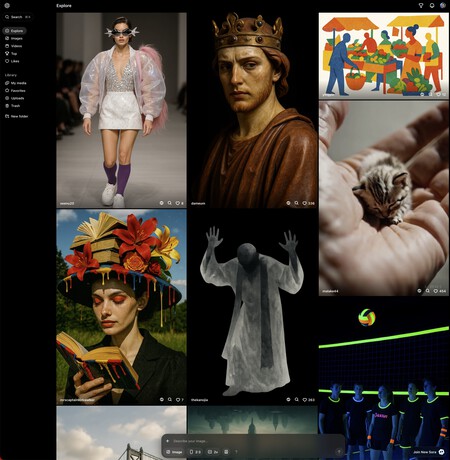
Sora’s website features an “Explore” section designed to captivate users through endless scrolling.
Trapped in Doomscrolling
The immediate effects of these initiatives are evident on the Sora website and its iOS app, available exclusively in the US for now. Users can access an infinite amount of content at virtually no cost—producing videos takes mere seconds. The tantalizing promise that “anyone can create viral videos” serves as an enormous incentive for continuous engagement. Yet, the trend raises questions: are we sacrificing authenticity in exchange for virality?
These platforms essentially transform the viral phenomenon into a formulaic approach. Users can easily employ emotional templates that tap into nostalgia, anger, or sentimentalism. While this method may generate more content, it risks diluting genuine expression, making everything feel algorithmically defined.
More Creators, More Slaves to Platforms
The landscape is changing rapidly. Social networks have built empires by turning users into voluntary content creators. Facebook pioneered this model, allowing users to share reflections, links, photos, and videos as a means of engagement. Fast forward to today, and platforms are enticing new creators with the power of AI. However, this transformation means that users may become even more entrenched as unpaid content generators while platforms monetize their attention.

The Credibility Crisis
As the volume of AI-generated content surges, distinguishing the authentic from the artificial will become increasingly difficult. Just two years ago, navigating this terrain with images was challenging; today, it’s nearly impossible. The risks go beyond deepfakes and scams; there is a tangible threat that discernable reality will blur, making it hard to trust even genuine photos and videos.
AI Slop: Where Are We Heading?
The term “AI Slop” refers to content generated by AI that is technically sophisticated yet often devoid of meaningful substance or intention. While we’ve seen these tools create text and images, their application in video is particularly impactful. Platforms are essentially churning out content that maximizes user engagement but lack in authenticity and depth.
OpenAI’s Ambition: Targeting TikTok
OpenAI’s Sora 2, with its new app and website, appears to be on a mission—perhaps indirectly—to dethrone TikTok, the reigning champion of short-form video content. Users now have the ability to create content featuring themselves in various scenarios, made possible by AI’s capabilities. This versatility may prove addictive for traditional TikTok users looking for fresh experiences.
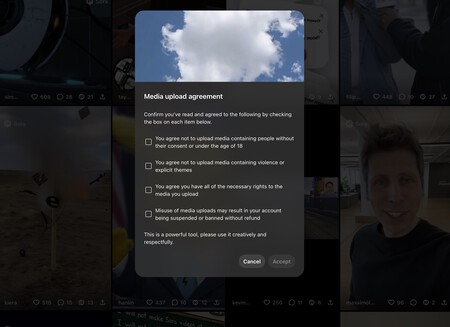
OpenAI alerts users about potential implications before allowing the upload of videos for cameos or mixtures.
While the potential for creative expression is immense, concerns regarding privacy and security cannot be ignored. As deepfakes and other manipulative technologies become more sophisticated, the challenge of discerning what is real versus what is generated becomes paramount. OpenAI does provide configuration options, parental controls, and warnings about uploading content, but whether these measures are sufficient remains uncertain.