
Shifting Temperatures in the Mediterranean: A Closer Look
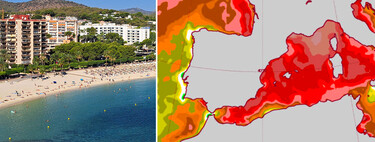
Recent weeks have shown a sharp change in the temperature of the Mediterranean Sea . Just weeks ago, this vital body of water connecting Europe , Africa , and Asia felt more like a hot tub, with surface temperatures soaring. Now, data reveals that these temperatures have plummeted to more typical summer values, only marginally elevated compared to historical norms for this time of year.
Subtle Adjustments. According to the latest readings from the coastal observation and prediction system of the Balearic Islands (Socib) , on August 7, the average surface temperature of the Mediterranean was recorded at 26.03º Celsius . This represents a thermal anomaly of just 0.54º Celsius —significantly lower than the alarming 2.26º that was reported in mid-June. The waters are returning to a state that is much more familiar and safer for marine life.
With this recent data in hand, we can conclude that the heat intensity, albeit diminished, is still present. The implications of such data are crucial for both marine ecosystems and coastal communities that depend on these waters for their livelihoods.
Temperature Distributions Shift. The change in temperature distribution across the Mediterranean is stark. Previously, the western segment of the sea was the hotbed of elevated temperatures, with the eastern side displaying more moderate conditions. Today, this trend has reversed.
As the data from Socib indicates, the average temperature in the Western Mediterranean has dipped to 25.01º , resulting in a thermal anomaly of just 0.29º . In contrast, the eastern section is currently reading 27.06º , which is 0.81º warmer than what would typically be expected. This creates a complex scenario that merits closer examination by climatologists and environmentalists alike.
A Diverse Ecosystem Under Pressure. The ability to monitor specific regions of the Mediterranean reveals even more about the temperature changes. The Northwest Mediterranean was notably affected; here, the thermal anomaly was a staggering four degrees a month ago. Now, it has moderated to a more stable situation with a positive anomaly of 0.17º . This area has transitioned to the most normalized region of the sea.
Previously, the waters around the Balearic Islands also experienced significant heat. On June 12, the anomalies were reported at 3.3º and 3.18º , respectively. Presently, the Balearic archipelago shows a slight elevation of only 0.36º compared to the baseline, while the Cabrera Archipelago is at 0.35º . These fluctuations are essential for both marine species and recreational tourism, indicating potential shifts in biological activity.
Understanding the Climate Dynamics. The weather throughout June was exceptionally hot across Spain and many Mediterranean regions. A combination of lack of winds and high solar radiation contributed to the extreme temperatures, turning the Mediterranean into a heated cauldron. However, a shift occurred in July when cooler systems entered the scene, marking a significant change in the atmospheric circulation patterns.
“Thanks to the dynamics of atmospheric circulation in recent weeks, with the passage of different troughs, the surface waters of the Mediterranean exhibit a panorama with a more normal spatial variability,” stated the prominent physicist and researcher at Aemet, JJ German , in a recent social media update.
Tempering Expectations. The decline in sea temperatures is indeed positive news. Excessively warm waters escalate the risks of severe storms and significant rainfall events, as seen recently in the Mediterranean basin. It raises the question of whether these stabilizing trends will continue or if temperatures will rebound once again.
As we step into August, a fresh wave of heat blankets Spain and stretches beyond the peninsula, disrupting the thermal calm that had been established. Uncertainties loom regarding how these fluctuating temperatures will impact the marine environment and raise questions about future storms, fires, and ecological consequences.
In summary, while the Mediterranean Sea has shown signs of stabilizing after a concerning temperature surge, the continuing evolution of its climate presents an ongoing challenge. Both scientists and residents of coastal areas remain watchful for signs of what comes next in these vital waters.
Image: Valentin Perret / ECMWF