
Mexico’s Negotiation for Water Amid Threat of Tariffs
The ongoing binational water dispute between the United States and Mexico has reached a critical point, fueled by threats of tariffs from President Donald Trump. In response to these tensions, Mexican President Claudia Sheinbaum is actively seeking a resolution that balances national interests and international obligations.
Background of the Water Dispute
The controversy stems from a 1944 treaty governing the distribution of water from the Bravo, Colorado, and Tijuana rivers. Under this treaty, Mexico is obligated to deliver a specific volume of water to the United States. As of late, Mexico has fallen behind in these commitments, needing to release approximately 200,000 acre-feet, or around 65 billion gallons, by the end of the year. Trump has warned that failure to comply would result in an additional 5% tariff on Mexican imports.
Sheinbaum’s Diplomatic Approach
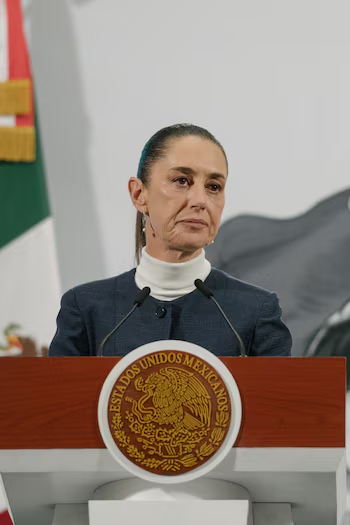
In a recent statement, Sheinbaum emphasized the importance of finding a solution that does not jeopardize Mexico’s agricultural production or the well-being of its citizens. “It’s not a matter of ill will on the part of Mexico,” she insisted, highlighting natural limitations that hinder immediate compliance. For instance, the current infrastructure, including the size of the pipelines, poses significant challenges in meeting the U.S. water demands swiftly.
Understanding the Treaty Provisions
The 1944 treaty includes provisions for extraordinary droughts, allowing Mexico to defer its outstanding water commitments to the next five-year cycle. While recent rains have enabled Mexico to supply more water than required in the short term, the country still lags in fulfilling its treaty obligations.
Meetings and Future Negotiations
As part of the ongoing discussions, U.S. and Mexican officials convened for their fifth meeting this year to address the water crisis. U.S. Secretary of Agriculture Brooke Rollins and Mexico’s acting Secretary of Foreign Affairs Roberto Velasco Álvarez were present during this crucial dialogue. The meetings are pivotal not only in addressing the immediate water issue but also in maintaining good diplomatic relations.
The Stakes of Tariffs
The threat of tariffs lingers as a heavy burden on the negotiations. In April, similar threats had prompted Mexico to allocate some of its water reserves, and the administration was preparing to increase water flow through October. However, Trump chose not to impose tariffs at that time. The stakes are high: additional tariffs could derail trade and cooperation between the two countries, affecting a wide range of economic sectors.
Conclusion
As both nations navigate this precarious situation, the focus remains on finding a mutually beneficial resolution that adheres to international treaties while safeguarding the interests of their citizens. Sheinbaum’s willingness to engage in dialogue and seek a solution reflects her administration’s commitment to diplomacy amidst external pressures. The outcome of these negotiations will not only impact water distribution but also the future of U.S.-Mexico relations moving forward.