
The Plaud Note Pro: Is It Worth the Investment?
When considering the purchase of the Plaud Note Pro, a pivotal question arises: why not just use an app? This skepticism isn’t unwarranted, especially after witnessing several AI devices like the Humane AI Pin and Rabbit R1 launch to high expectations but limited success. In a market saturated with bold claims, the Plaud Note Pro aims to establish its value by addressing a specific need—recording, transcribing, and structuring conversations. But is its specialized approach enough to justify its nearly 200-euro price tag?
Real-World Testing: A Month of Usage
To gain insight into the Plaud Note Pro’s functionality, our colleague Ana Boria tested the device over a month within various real-life scenarios, including meetings and casual conversations. Her hands-on experience sheds light on whether this AI-focused device can outperform typical smartphone applications.
Compact Design and Practical Features
Upon unboxing, Ana noted the device’s surprisingly small size, which enhances its portability. This compact design serves a purpose: ensuring the device is always readily accessible. The Plaud Note Pro features compatibility with MagSafe, making it easy to attach to an iPhone. For those without MagSafe, an adapter ensures that it remains convenient to carry along.
The Recording Experience: First Impressions
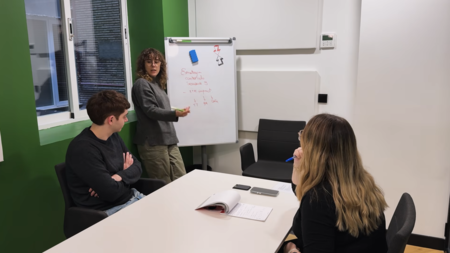
The true evaluation began when Ana pressed the record button for the first time. Even in an impromptu setting, it demonstrated impressive capabilities. Despite a few minor errors with names, the device accurately captured the key concepts discussed, a testament to its advanced AI algorithms. This initial success set the stage for more challenging scenarios where multiple voices and background noise could potentially complicate transcription.
Performance in Noisy Environments
In more demanding situations, the Plaud Note Pro’s strength was further tested. The ability to discern speech in a noisy environment is critical for such devices, and here, it differentiated itself from standard apps. The quality of transcription changed significantly under duress, showcasing the AI’s role in enhancing audio clarity and understanding when multiple speakers were involved.
Language Support and Privacy Considerations
One notable feature is the capability to transcribe meetings in 112 languages. However, the practicality of this feature is dictated by how well it handles specific languages, such as Spanish, and its reliability with unusual or technical vocabulary. Privacy is another concern for users, particularly when dealing with sensitive professional information. Ana highlighted that the device complies with stringent measures and legislation to safeguard recorded data.
Understanding Usage Limits: The Minute System
Another significant aspect is the minute recording system. With the Plaud Note Pro priced at 189 euros, it includes an initial free plan of 300 minutes per month (approximately five hours). This limitation needs consideration; for anyone recording numerous meetings or classes, these minutes can deplete rapidly. Ana’s experience prompted her to explore various subscription plans to find options best suited to different user profiles.
Conclusion: Simplicity and Specialization
Ultimately, the Plaud Note Pro shines in its simplicity and specialized function. If you’re seeking a dedicated device for recording and transcribing conversations rather than a multi-purpose app, the Plaud Note Pro may be worth the investment. Ana concluded her findings by affirming that if you want to dive deeper into its strengths and limitations, the full analysis is available on the Xataka YouTube channel.
While the expectation for AI devices is to exceed conventional solutions, the Plaud Note Pro emerges as a promising candidate for those needing reliable transcription capabilities in various settings.