
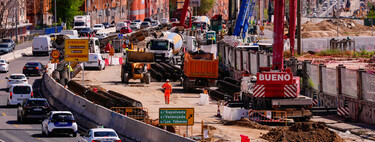
With two years behind and another three years projected ahead, Valencia is embarking on one of its most significant urban transformation projects surrounding its central park, adjacent to the Joaquín Sorolla station. This project aims to convert the city’s most vital mobility hub into a more accessible and integrated space. According to statements found on the project’s official website, it represents “the project of greatest urban impact in the city.”
The scale of these reforms is immense and ambitious. In summary, the project entails creating a New high-speed rail access connecting Madrid-Valencia with the Mediterranean corridor. Both the conventional and high-speed rail lines will be buried, leading to the development of a new central station. While the exterior façade will be preserved, the interior will be completely transformed into a vast intermodal station. This space will accommodate high-speed trains, conventional lines, subways, and buses, while also reforming areas dedicated to freight transport.
In terms of numbers, Valencia anticipates regaining a total of 230,000 square meters through this venture. Much of this recovered area will be dedicated to green spaces, which will enhance accessibility between neighborhoods currently separated by train tracks. The projected cost of the rail transformation alone is estimated at 665 million euros, with both Adif and Renfe expected to cover over 50% of this expense.
The project is currently in an active phase. Dubbed the “Playground of Roads,” this expansive area utilized by trains reaching the station has been an imposing barrier. Work is underway to bury this zone, commencing with the excavation of a 1.2-kilometer tunnel.
However, this new stage has not been without its complications.
A Gas Leak and Various Problems
Two years into the project, local residents are beginning to feel the adverse effects. While it is typical to encounter inconveniences during such endeavors, tension escalated when excavations by Adif led to a gas leak on Olta Street, which runs perpendicular to García Lorca Boulevard.
The situation was deemed “controlled” after it was determined that a gas pipe had been damaged during the excavation. Adif officials emphasized to the newspaper Levant that there was no imminent risk to the public. Emergency protocols were activated, and rapid notifications were sent to first responders.
On the day of the incident , crews worked tirelessly to restore service, which necessitated confining a nearby community for safety reasons.
Nonetheless, the gas leak has proven to be “the straw that broke the camel’s back,” as expressed by aggrieved residents who offered their testimonies to the local media. They cite ongoing vehicle disruptions and the difficulty of conducting business due to persistent construction-related disturbances.
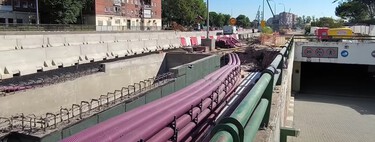
Residents also mentioned the increased frequency of power and water outages, with reports of homes sustaining structural damage. Such issues are far from unprecedented; previous projects in Valencia have similarly resulted in crack damage due to excavation activities.
For example, in Madrid, residents along the A-5 have experienced frequent service interruptions attributed to ongoing road construction. In nearby San Fernando de Henares, where Metro line expansion has caused severe structural damage, residents have long reported the destruction of their homes, with 73 buildings ultimately demolished due to serious structural issues linked to the ongoing works.
Photo | Valencia Central Park
In Xataka | Madrid faces a capital challenge with the underground of the A-5: living with a hell in the face of the promise of future success