
The Challenge of Medication Expiration on Mars
The logistical challenges of a Mars mission are numerous, but one of the most pressing issues is ensuring a reliable supply of medications. Astronauts can’t pack a suitcase full of “just in case” items; every additional kilogram requires substantial fuel. While many items may be deemed expendable, medications are non-negotiable. Unfortunately, research shows that many drugs degrade far quicker in space than on Earth.
Understanding Medication Expiration
Research conducted on the International Space Station (ISS) reveals alarming statistics: roughly half of tested medications expire within a mere three years. Considering the distance to Mars and the infrequency of resupply missions, it becomes clear that these medications might not survive a full stay on the planet. Thus, developing methods to produce drugs directly in space becomes an essential priority.
Harnessing Plants for Pharmaceutical Production
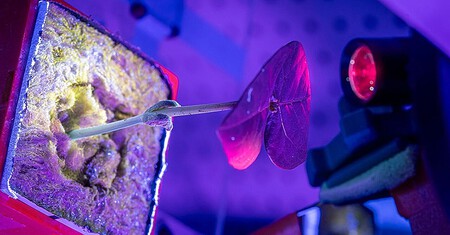
A groundbreaking study from scientists at the University of California San Diego proposes a promising solution: using plants as pharmaceutical factories. They utilize viruses as vectors to encourage the production of proteins with medicinal potential within plant cells. This approach offers a dual benefit: the plants aid in recycling air and water in closed habitats on Mars.
While similar techniques exist on Earth, the traditional equipment required for drug extraction is too bulky for Martian missions. However, researchers have innovated a method to redirect valuable substances into a plant compartment known as the apoplast, allowing for simple extraction without complex machinery.
Key Findings from ISS Experiments
Experiments on the ISS have uncovered that drugs like amoxicillin, levofloxacin, levothyroxine, and even common analgesics like aspirin and ibuprofen degrade rapidly in space conditions. These are critical medications that would be pivotal for astronauts on long-term Mars missions, highlighting the pressing need for in-situ pharmaceutical manufacturing.
Plants: Nature’s Factories
In this innovative study, researchers Explorer the cowpea mosaic virus, which not only infects plants but has also shown potential in stimulating the immune system and combating cancer in some animal models. The team infected Nicotiana benthamiana plants, known for their rapid biomass generation, facilitating the extraction of viral particles.
Simplifying Drug Production
Most medicines originate from substances other than viruses, so the strategy employed involves genetically modifying the virus to produce medicinal proteins. While conventional extraction techniques often involve destroying the plant material, scientists have found a simpler method that allows proteins to be secreted directly into the apoplast during treatment.
By submerging the leaves in a buffer solution and applying a vacuum, the desired proteins are efficiently extracted without major complications. This process not only streamlines drug production but also makes it feasible for use on Mars.
Experimentation Under Simulated Space Conditions
Researchers have conducted tests with over 50 plant species, simulating harsh Martian conditions, including microgravity and temperature fluctuations. Surprisingly, these simulations often improved the plants’ resilience against stress, revealing yet another layer of potential for utilizing plants in space. The research promises not only viable medication production but also enhancements to plant performance when exposed to adverse conditions.
Conclusion
As we look toward the future of Mars colonization, addressing medication expiration through innovative solutions will be critical. By harnessing the power of plants and viruses, scientists are paving the way for a sustainable and effective means of pharmaceutical production in space. This development could significantly improve the health and well-being of astronauts on long-duration missions, ensuring they have access to the medications they desperately need.