
The Rise of BYD: A Game-Changer in the Auto Industry
In the year 2020 , as the world grappled with the unprecedented challenges posed by the COVID-19 pandemic , Toyota and BYD forged a pivotal agreement to collaborate on electric vehicle (EV) development. Fast forward five years, and BYD has emerged as the fifth largest vehicle manufacturer globally as of 2025, leaving industry giants like Toyota in a state of stunning disbelief .
“We are stunned”, echoed the sentiments of several Toyota employees who expressed surprise at BYD’s rapid ascent in the electric vehicle market, as reported by Reuters. Despite the pandemic year being a challenging time for many automakers, BYD’s strategy has paid off, positioning itself as a dominant player in an increasingly competitive landscape.
Based on the collaboration that began in 2020 , the two companies aimed to develop electric vehicles for the Chinese market, considered the most competitive electric car arena globally. However, the road to success has certainly not been free of bumps.
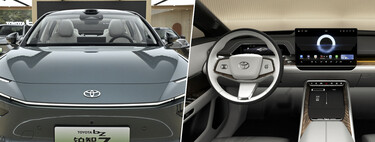
Initial Achievements. Thus far, Toyota has successfully launched the BZ3 , a fully electric sedan in China, although its reception has been rather discreet . The Japanese brand struggles to maintain its historical allure in a market that increasingly favors aggressive styling and high-tech features . However, the upcoming TOYOTA BZ3X , expected to hit the market this year, has generated excitement with over 10,000 pre-orders within just an hour of its announcement.
Moreover, by 2025 , Toyota’s roadmap includes launching the Bz5 and the more substantial BZ7 , solidifying its future in the EV market. However, these milestones might not be enough to reclaim the spotlight from the agile Chinese competitor.
(Re) Learning. One crucial takeaway for Toyota from this partnership has been the necessity to relearn effective vehicle manufacturing. Employees revealed their astonishment regarding BYD’s operational agility—how quickly decisions are made and protocols are adjusted.
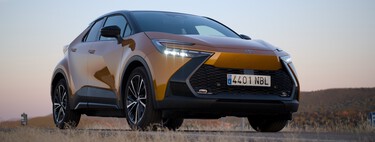
This newfound awareness touches on Toyota’s traditional methodologies—where weeks, if not months, are devoted to creating multiple vehicle prototypes and exhaustive testing before a product hits the market.
In a stark contrast, BYD’s expedited processes enable quick adaptations, a point emphasized in the Reuters report. Where Toyota may produce many prototypes requiring extensive testing over thousands of kilometers, BYD opts for a more streamlined approach.
Selective Adaptation. However, it is equally noteworthy that Toyota chooses to be selective in adopting practices from BYD. While gaining invaluable insights, the company remains cautious about compromising its reputation for reliability . A Toyota employee noted that hedging on established design and testing protocols would be seen as reckless.
The general sentiment within Toyota is one of wary optimism—balancing the need to adapt and innovate against potential risks to its legacy.
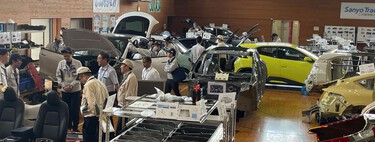
A Cautionary Tale. The lessons that Toyota learns from its collaboration with BYD are not entirely new. Zeekr , a subsidiary of Geely aiming to break into the European market, has similarly highlighted the significance of cost-effective production methods and streamlined materials. Industry experts have noted that legacy manufacturers like Toyota may be allocating excessive resources to components unnecessary for electric cars, leading to inefficiencies.
Time will tell if Toyota can successfully balance its legacy focus on quality and reliability with a new need for speed and agility in the EV sector—an equation that could determine its future relevance in the increasingly electrified automotive landscape.
As the automotive industry evolves, the interplay between established brands and innovative newcomers like BYD underscores a shifting paradigm—a necessity for adaptability coupled with steadfast commitment to quality. The road ahead is laden with challenges and opportunities that will ultimately shape the future of both companies and the industry.