
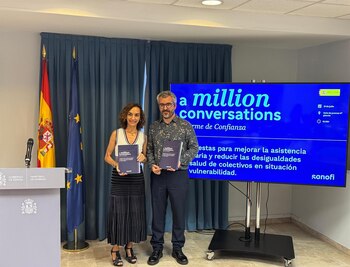
A recent report titled “A Million Conversations,” a joint initiative by Sanofi Spain and various health organizations, highlights a troubling trend: 65 percent of Spaniards have lost confidence in the National Health System (SNS) . The study reveals that specific vulnerable groups, including individuals with disabilities (77%), ethnic minorities (73%), the LGTBIQ+ community (71%), and women (69%), exhibit even higher levels of discontent .
Conducted by The Brand and Reputation Collective (BRC) and Purpose Union , the report surveys 2,688 Spanish citizens and integrates feedback from literature reviews and structured interviews to paint a comprehensive picture of public sentiment regarding healthcare. Among the findings, 52 percent of respondents reported experiences that significantly tarnished their trust in healthcare professionals. Disturbingly, this sentiment was amplified among individuals with disabilities (63%), LGTBIQ+ community members (61%), ethnic minorities (59%), and women (57%).
The report further uncovers that vulnerable groups are significantly affected by negative experiences related to their identity, with 28 percent of participants identifying age as a factor that played a crucial role in their deteriorating confidence in healthcare services. This alarming trend underscores a healthcare landscape fraught with barriers, such as cultural, linguistic, socio-economic , and territorial obstacles that contribute to a diminished quality of care for marginalized populations.
The Call for Change
In a recent presentation, Javier Padilla , Secretary of State of Health, emphasized the necessity of restoring public faith in the healthcare system, particularly among vulnerable populations. “We must foster a sense of pride in our public health system,” he stated, reiterating that this sentiment should be cultivated within healthcare consultations.
To this end, the Ministry of Health is prioritizing several legislative initiatives, including a Patient Organizations Law , a Universality Law , and improved services for marginalized groups such as the homeless and the LGTBIQ+ community. Alongside these reforms, Padilla asserted the importance of enhancing healthcare professionals’ training to ensure they can adequately serve diverse populations.
Voices from the Ground
Representatives from various vulnerable communities articulated the unique challenges they face while accessing the SNS. Maite Andrés , director of the Department of Social Inclusion , pointed out that systemic barriers, such as poverty and lack of education, hinder the Gypsy population’s ability to seek healthcare. “The inequalities entrenched in our society can seriously compromise the adequacy of care,” she noted, highlighting that, for some families, the costs associated with vaccinations are prohibitively high.
Similarly, José Luis Fernández , the president of the Spanish Confederation of Elderly Organizations (CEOMA) , advocated for equitable healthcare access regardless of age. “Health is a universal right; it must be available to everyone, irrespective of how old they are,” he asserted. Daniel Aníbal García , representing the Spanish Committee of Representatives of Persons with Disabilities (CERMI) , criticized ongoing discrimination faced by people with disabilities, advocating for enhanced socio-healthcare mechanisms.
Recommendations for Improvement
In light of the findings and discussions fostered by the “A Million Conversations” report, several strategies have been proposed to rebuild public trust in the SNS. Key recommendations include ensuring territorial equity , facilitating universal access , and reforming the healthcare delivery model to bolster primary care, enhance innovation, and prioritize training for healthcare professionals.
The report also advocates establishing socio-economic support mechanisms and advancing digital integration within healthcare systems to streamline processes. Furthermore, it underscores the necessity of fostering patient involvement and accountability while enhancing existing services for vulnerable communities.
In summary, the “A Million Conversations” report not only highlights a critical loss of confidence in Spain’s National Health System but also articulates a roadmap to restore trust and improve healthcare access for all citizens. The insights and recommendations presented in the report could serve as a catalyst for reform aimed at creating a more inclusive and effective healthcare system that prioritizes every individual’s right to health.