

Abelardo de la Espriella’s Independent Stance
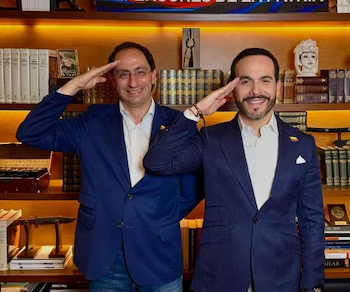
Abelardo de la Espriella, the Colombian lawyer and presidential candidate, has firmly stated that he will not rely on traditional political parties in the upcoming May 2026 elections. Running alongside his vice-presidential candidate, José Manuel Restrepo, a former Minister of Finance, he aims to offer a fresh, independent alternative to Colombia’s political landscape.
A New Political Approach
De la Espriella’s declaration highlights his commitment to an independent political agenda. “The only way to change Colombia, transform it and take it to the place of greatness it deserves is to be completely independent,” he explained, emphasizing that his campaign has not accepted financing from large economic and political players. By distancing himself from traditional politics, he hopes to showcase a new approach to governance devoid of corruption and vested interests.
Rejecting Alliances with Traditional Leaders
For four months, De la Espriella has turned down offers from traditional political figures seeking to join his campaign. He articulated his stance by stating, “Whoever negotiates with the devil ends up entangled.” His refusal underscores a desire to maintain integrity and uphold the principles of his campaign, which he believes would be compromised by aligning with established political entities.
Critique of the Current Political Climate
In speaking with Semana, De la Espriella reiterated his and Restrepo’s commitment to uphold their independence and credibility. They are not open to alliances with individuals associated with the outgoing government of President Gustavo Petro, viewing such affiliations as detrimental to public trust. They fear that such alliances would dilute their mission and lead to compromises harmful to their supporters.
Evaluating Potential Collaborations
While De la Espriella had been approached for a potential alliance with Senator Paloma Valencia of the Democratic Center, he has expressed reservations. Despite acknowledging her admirable initiatives, he delineated the differences in their political visions and emphasized that their tactics were misaligned. Valencia’s alliances with traditional politicians raised concerns for him, leading to his decision against a partnership.
Common Ground and Divergence
Both De la Espriella and Valencia, along with former President Álvaro Uribe Vélez, agree on certain issues, particularly regarding their opposition to President Petro and left-wing candidate Iván Cepeda Castro. However, De la Espriella cautions that a unified front solely based on mutual opposition is insufficient. He believes that aligning with certain political figures could create more complexities that may hinder effective governance.
Conclusion: A Call for Serious Political Change
De la Espriella’s political journey revolves around a clarion call for serious transformation in Colombia. He argues that unity based on fear of opposing figures does not equate to sound governance. As the electoral race intensifies, he remains committed to maintaining his independence, distancing himself from traditional political practices, and fostering a transparent agenda that resonates with the public’s desire for genuine change.
General News – 2