
The Complex Landscape of Macronism: Ambitions and Challenges Ahead
As Emmanuel Macron embarks on his second term, the political landscape in France is shifting dramatically. His administration has fostered a unique political style, often referred to as macronisme, which aims to transcend traditional party lines. However, as the summer of 2022 drew closer, the tensions surrounding succession and ambition within his party became evident.
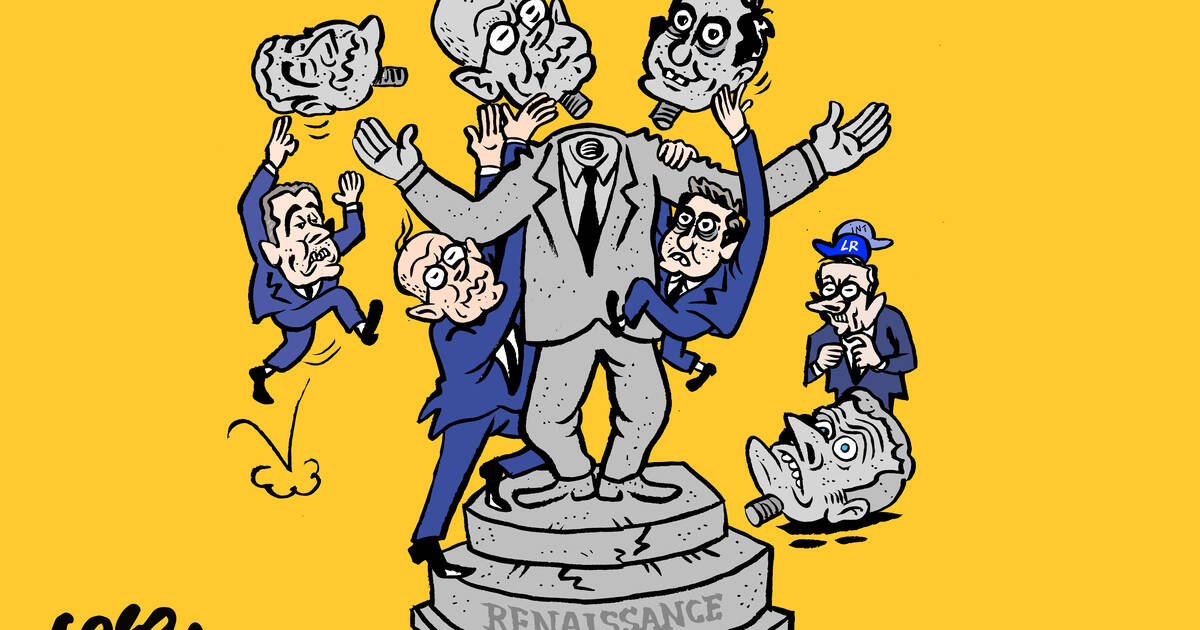
During a dinner held in the magnificent gardens of the Elysée Palace, Macron gathered key members of his party. This included figures such as Prime Minister Élisabeth Borne, Assembly President Yaël Braun-Pivet, and other prominent ministers. The atmosphere among this elite gathering was charged, as many began to envision themselves as potential successors for the 2027 presidential election. Macron, well aware of such ambitions, made it clear that unity was paramount: "When the time comes, I will commit," he stated. Yet, did he foresee that the succession war would ignite merely three years into his second term?
In the ongoing conversation about macronisme, recent declarations from opposition party members—such as Sophie Primas, who predicted "the end in the coming months"—have sparked debates about the future relevance of Macron’s political movement. Historically viewed as a remedy for traditional political divides, macronisme faced its own existential crisis, mainly stemming from questions about its essence and sustainability. What is macronisme? Is it a mere clan or a broader political ideology intended to break away from outdated perspectives?
While traditional political parties like the Socialists and Republicans seem to struggle with renewal and cohesion, Macron’s supporters argue the opposite. Philippe Grangeon, co-founder of Macron’s movement, asserts, "It would be wrong to think that just because Emmanuel Macron won’t run in 2027, the offer he represented isn’t sustainable." This bold statement reflects an intricate struggle as macronisme seeks to preserve its core while welcoming change.
The landscape appears dynamic. If traditional parties fail to reclaim their footing, the effects of Macron’s leadership may leave a lasting imprint on French politics. Ambroise Méjean, president of the Youth Movement with Macron, believes history will remember this phase as a triumph of crossing divides. By appealing to the aspirations of ordinary citizens, Macron disrupted the old political order in a remarkably short time.
Nevertheless, the emergence of the far-right remains a threat that Macron’s supporters need to address. Roland Lescure, a deputy from Macron’s party, emphasizes the necessity to maintain the capacity for moderation and unity in the face of extremist influences. Gabriel Attal, the party’s Secretary General, proudly adopts the "central" positioning, asserting the party will not align itself with conventional right or left ideologies, but rather engage in pragmatic solutions that resonate with people.
However, the ambition to stretch towards the right has stirred discontent within the party itself. When Attal proposed stringent measures, like restricting the wearing of veils for girls under 15, internal divisions surfaced. Some party members lamented a shift away from core principles towards a more reactionary stance.
As the political atmosphere continues to evolve, it becomes evident that the idea of macronisme is at a tipping point. Stéphane Travert, a deputy from the Manche region, stresses the importance of remembering the original tenets established in 2017. His assertion underscores a collective anxiety about diluting the party’s identity amidst shifting ideological landscapes.
With potential new factions blossoming, the movement risks fragmentation if internal discrepancies remain unaddressed. Macron, from his vantage point at the Elysée, keeps a watchful eye over these developments. He’s aware of the slow but sure emergence of new leaders like Gabriel Attal, who has taken command of the Renaissance party, and the dynamics that accompany such shifts.
The rise of this political faction has led to calls for a reevaluation of party identity and coherence. As Aurore Bergé, one of the loyalists, advances her aspirations for the presidency, the urgency to reclaim the essence of macronisme becomes palpable. She argues for a dedication to collectively build upon Macron’s legacy, stressing the need for shared conviction and integrity.
The looming challenge for Macron and his successors is not merely to maintain unity but to uphold the foundational principles that led to the establishment of macronisme in the first place. His recent reflections, which reveal a casual detachment regarding the future of his movement, suggest a reckoning may soon be necessary. It raises an unsettling question: how will the narrative of macronisme evolve once Macron no longer occupies the presidential office?
Ultimately, the future of macronisme hangs in the balance, resting on the ability of its leaders to navigate lingering ambitions while staying true to its original mission. As the political dynamics shift, only time will reveal whether Macron’s vision can indeed withstand the test of time and continue to thrive in the complex world of French politics.