
| IN BRIEF |
|
The oceans , vast expanses covering much of our planet, are filled with numerous mysteries. Central to ongoing geological research are the movements of tectonic plates and the expansion of ocean floors. Recent studies have revealed the profound impact of these movements on sea levels and the global climate. Such discoveries deepen our understanding of the natural processes that significantly and sustainably alter our environment.
Slowdown of Oceanic Expansion
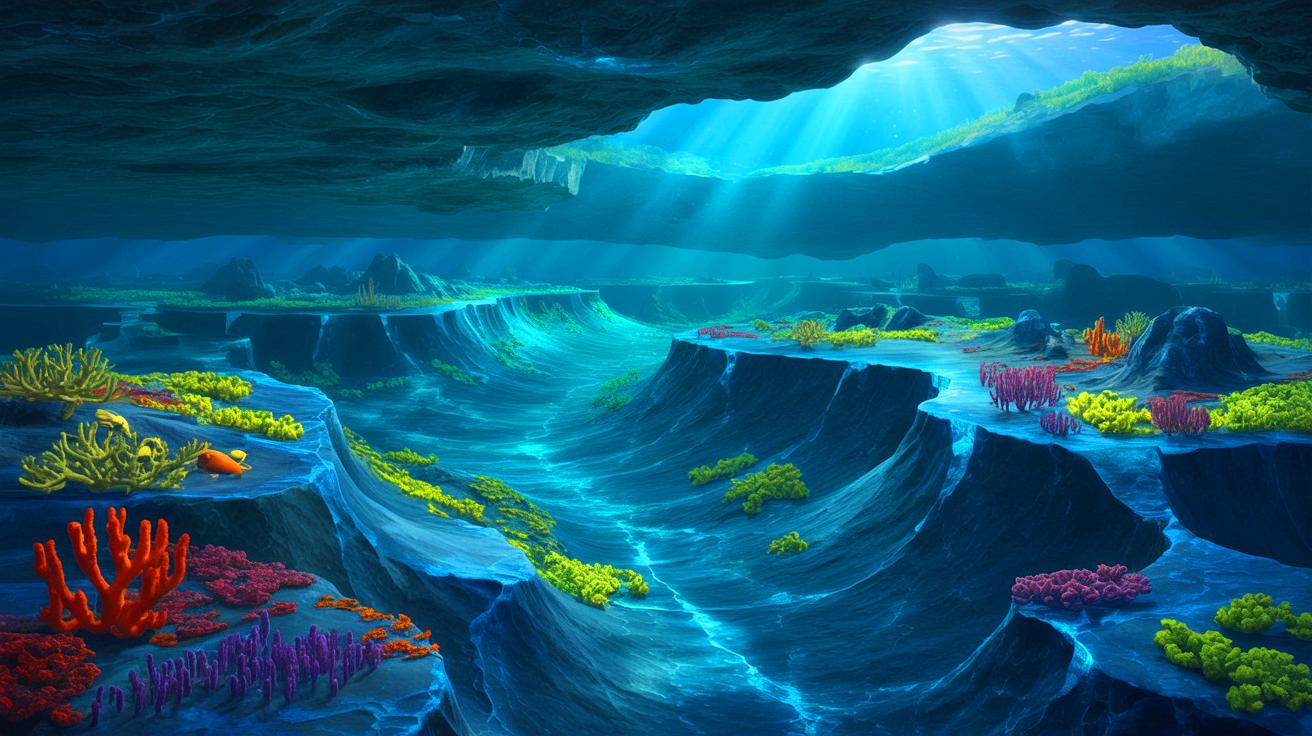
Ocean floors are in continual evolution, shaped by the movement of tectonic plates. A recent study led by Colleen A. Dalton has shed light on a slowdown of oceanic expansion that occurred between 15 and 6 million years ago . This period led to deepening oceanic basins, causing a decrease in sea level estimated between 26 and 32 meters .
To reach these conclusions, researchers analyzed various parameters such as the age of oceanic crust , its area, and its rate of destruction. This data allowed them to precisely quantify changes in sea level and apprehend the magnitude of ongoing geological processes. The reduction in the production of oceanic crust during this period is a key factor in understanding these changes. These studies highlight the importance of tectonic phenomena in regulating ocean levels over the long run.
Impact on Terrestrial Heat Flow
The slowdown of oceanic expansion affects not only ocean topography but also terrestrial heat flow . The dissipation of the Earth’s internal heat through the oceanic crust is a crucial process, particularly at ridges where fresh rock comes into direct contact with seawater. According to the study, this thermal dissipation has decreased by an average of 8% , and up to 35% at ocean ridges.
This reduction in thermal flow has likely affected the chemistry of the oceans. Hydrothermal interactions and the dissolution of minerals in seawater may have changed, leading to alterations in oceanic chemical composition. This could have cascading effects on marine ecosystems and global biogeochemistry. Scientists continue to explore these complex interactions to better understand the long-term consequences of tectonic processes on the marine environment.
A drifting ice monster reveals the unimaginable: ancient life forms emerge from the frozen seabed
Reduction of Submarine Volcanic Activity
The formation of oceanic crust is often accompanied by intense submarine volcanic activity , releasing carbon dioxide (CO₂) into the atmosphere. However, during the slowdown of oceanic expansion, this volcanic activity diminished. Researchers suggest this reduction led to a decrease in CO₂ emissions, contributing to global cooling .
A cooler climate favors the expansion of ice sheets, capturing more water in the form of ice and thus reducing the volume of water in the oceans. This thermal contraction of the oceans, combined with the expansion of ice sheets, could have caused an additional decline in sea level of over 60 meters . These phenomena illustrate how tectonic changes can significantly influence global climate and ocean levels.
Shock investigation: these very well-known influencers buying followers to earn money
Correlations with Geological Archives
Geological archives play a crucial role in validating models and scientific hypotheses regarding changes in sea level. The findings of the study conducted by Colleen A. Dalton and her colleagues align with stratigraphic data obtained from coastal sediment deposits. These data, collected notably from New Jersey and off the coast of Nova Scotia, provide tangible evidence of historical sea level fluctuations .
Coastal sediment deposits offer a window into Earth’s geological past, allowing scientists to reconstruct the history of climatic and tectonic variations. By combining this data with current models, scientists can better understand the complex dynamics governing ocean levels. Stratigraphic data is a valuable tool for understanding these interactions and illuminating the future implications of tectonic changes for our planet.
Research on ocean floors and tectonic movements provides a fascinating glimpse into Earth’s dynamics and their impact on ocean levels. These studies illuminate complex phenomena influencing our climate and environment. As we continue to explore these mysteries, we wonder what new discoveries about the interactions between plate tectonics and climate changes await us in the future.
The author utilized artificial intelligence to enrich this article.
Did you like this? 4.4/5 (27)