
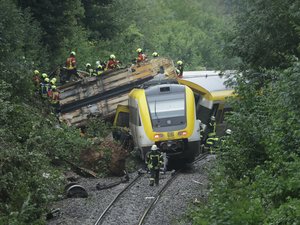
A passenger train derailed late in the day in southwest Germany on Sunday, July 27, 2025. The incident occurred around 6:10 p.m. near Riedlingen in Baden-Württemberg, leaving a grim toll of four fatalities and several injured, according to police reports.
As many as a hundred passengers were aboard the train during the accident. Stuttgart police confirmed that the investigation is underway to determine the exact causes of this tragic event. Eyewitness accounts describe a scene rife with chaos as emergency responders worked tirelessly to manage the aftermath.
🚨 [🇩🇪 ALLEMAGNE] 🚨
📉Many victims are reported after the derailment of a train carrying passengers near Biberach. pic.twitter.com/hkxqtumnj– Little think tank (@L_thinktank) July 27, 2025
Several Dead
An extensive rescue operation was swiftly initiated, but details on the severity of injuries remain scarce. Images from the scene reveal rescuers working to free passengers trapped in the overturned train cars, set against a backdrop of dense woods.
According to the daily newspaper Bild, authorities faced challenges reaching the accident site. Distances in rural areas of Germany can be significant, and this has raised concerns regarding emergency response times. Notably, the German rail system has been criticized by passengers in recent years for issues like frequent delays and deteriorating infrastructure.
The German government , led by Conservative Chancellor Friedrich Merz, has pledged to invest several hundred billion euros over the next few years to modernize infrastructure, addressing longstanding issues that have plagued the rail system. As the nation grapples with the fallout from this tragic derailment, there are calls for a critical evaluation of the safety protocols and infrastructure resiliency in place within the rail network.
Remote areas like Riedlingen often lack immediate access to resources needed for efficient rescue operations, heightening the importance of governmental commitment to enhancement in emergency responsiveness. This tragedy serves as a painful reminder that, while technology advances, the basic infrastructure upon which it operates must not be neglected.
For many travelers, this incident exacerbates existing fears regarding rail travel in Germany. As the news spreads, it will likely reignite discussions about improving safety standards and ensuring efficient emergency protocols are in place, particularly in less accessible locations. Observers are keenly watching how government officials will respond in the wake of this incident, especially given past scrutiny about rail infrastructure safety .
In the aftermath of the derailment, the focus centers on the victims and their families. Beyond the numbers, there are individual stories and lives affected, making it crucial for the community to come together in support. As rescue operations continue, public sentiment will increasingly demand accountability and action from officials to prevent future tragedies from occurring.