
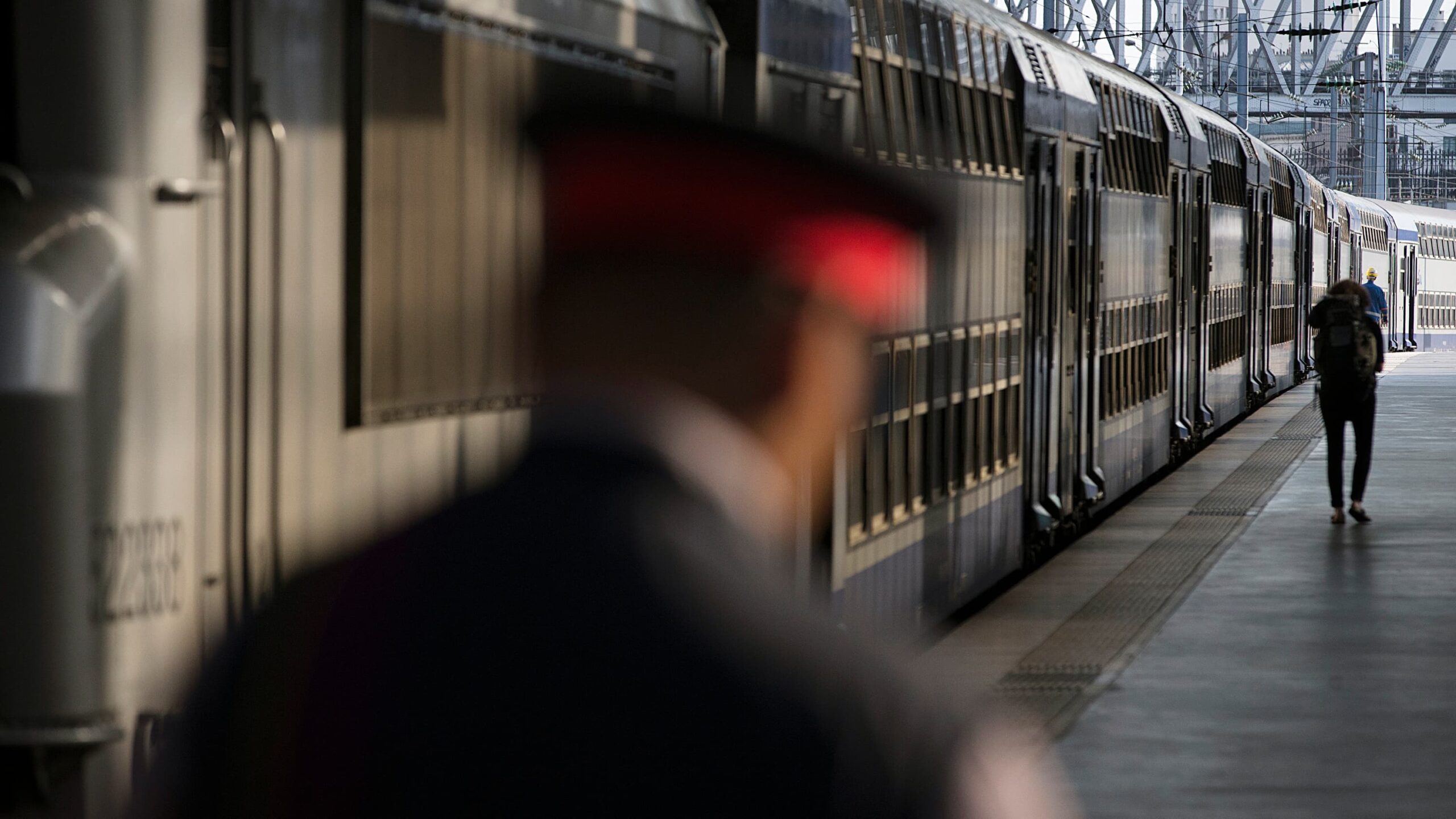
The Controversial Comments of Philippe Deschamps: A Prelude to a Broader Debate
Introduction
In an age where social media has become a platform for both personal expression and public discourse, the responsibilities of public officials are often tested. One such incident involves Philippe Deschamps, the sous-préfet of Thionville, who recently sparked controversy with his comments comparing the performance of SNCF rail controllers to that of their counterparts at Trenitalia. Deschamps’s remarks raise significant questions regarding professionalism, the duties of public servants, and the implications of social media on public perception.
The Comments
In a post on Facebook, Deschamps compared the work conducted by a Trenitalia rail controller to that of an SNCF controller. He claimed that the Trenitalia controller was far more hardworking, providing customer service like meal delivery and waste collection, whereas he criticized the SNCF controller for being less active, even accusing him of merely "sleeping in his compartment." His statement not only highlighted a perceived disparity in job performance but also brought into question the remuneration differences between the two roles, suggesting the SNCF’s approach to customer service was inadequate.
Impact on Public Perception
Deschamps’s comments went viral, igniting a debate about the responsibility of public officials in voicing personal opinions on public platforms. As a sous-préfet, Deschamps is expected to adhere to a standard that ensures objectivity and neutrality. His remarks have led many to question whether public servants should express opinions that could be interpreted as biased or derogatory towards public services, especially the SNCF, which is a state-owned entity.
A key point is whether an official comment like Deschamps’s could enhance the image of an alternative service provider at the expense of public trust in a national entity. Critics argue that his remarks could contribute to a deterioration of trust in public services, while his supporters see it as an opportunity to advocate for needed improvements in service quality.
The Comparisons: Trenitalia vs. SNCF
Deschamps pointed out that a Trenitalia controller reportedly earns between €3,800 and €4,000 monthly, whereas an SNCF controller makes approximately €3,400 towards the end of their career, including bonuses. This substantial difference raises further questions about job roles and responsibilities. Are the roles effectively the same? Are the working conditions comparable in terms of expectations and deliverables?
Deschamps stated, "One works hard with a smile, while the other hides to do as little as possible." This stark comparison cuts sharply to the core of audience perceptions of public sector job performance, leading many to align with his perspective that SNCF could improve.
Responses from the SNCF and Public Servants
Following the uproar, responses began to flood in from both SNCF employees and public commentators. Some called his comments "reprehensible," highlighting the fact that public servants should be neutral and adhere strictly to the duty of reserve as stated in French law. The duty of reserve emphasizes that public agents should refrain from expressing personal opinions that may conflict with their official roles or undermine public trust.
One SNCF employee expressed dismay, calling it "astonishing" that a government representative would favor foreign interests over those of French rail services, thereby denigrating the profession as a whole. This sentiment illustrates the potential repercussions of Deschamps’s comments on the morale of public employees who are already navigating a landscape fraught with challenges.
The Role of Social Media in Public Discourse
The incident raises the essential question of social media’s role in public discourse. Philippe Deschamps utilized Facebook, a platform that makes it easy to express opinions, but it also complicates the nature of professional communications. How should public officials navigate their personal views while maintaining their professional responsibilities?
Many argue that public officials should remain vigilant about their communications, especially when those communications can influence public perception of critical services. Social media provides a unique opportunity for engagement but can also lead to public relations challenges when officials cross the line from professional critique into disparagement.
Conclusion
Philippe Deschamps’s comments serve as a pertinent example of the difficult balance public officials must maintain between personal expression and professional responsibility. While serving as a client and sharing his experiences might seem normal, it could alienate voters and create distrust in public institutions.
The overarching lesson is that with freedom of speech comes the responsibility to articulate thoughts in a way that doesn’t undermine the public trust. Ultimately, a discussion about improving public services, such as SNCF, should be constructive and rooted in facts rather than personal critiques.
In the age of social media, where opinions can easily spiral into public controversies, it becomes imperative for public officials to remain aware of their words’ weight.
Philippe Deschamps, sous-préfet de Thionville, rompant son devoir de réserve compare sur Facebook le travail effectué par un agent de bord de la compagnie nationale et celui d’un contrôleur de Trenitalia et dit fuir la SNCF.
C’est un commentaire qui ne passe pas. Sur Facebook, Philippe Deschamps a commenté ce dimanche un post du journal Les Echos à propos d’un sondage sur les compagnies ferroviaires préférées des Français.
Et c’est une attaque en règle contre la SNCF alors que cet agent est soumis au devoir de réserve.
“On peut regarder ce que fait un contrôleur de Trenitalia et ce que fait un contrôleur français”, explique-t-il dans un fil de commentaires au sujet du salaire des chefs de bord.
“J’ai comparé et je comprends très bien la différence de rémunération puisque la seule chose faite par le contrôleur de la SNCF est d’avoir dormi dans son compartiment alors que son homologue n’a pas cesser de travailler y compris en m’amenant mon repas, en ramassant les déchets, en contrôlant deux fois plus vite un wagon et en réglant en deux coups de cuillère à pot des petits soucis des passagers”.
En effet, un chef de bord chez Trenitalia percevrait autour de 3.800/4.000 euros par mois alors qu’un contrôleur opérant dans un TGV toucherait en moyenne (en fin de carrière) autour de 3.400 euros nets, primes incluses (reste que les comparaisons sont très délicates étant donné la complexité des rémunérations).
Et de poursuivre son attaque: “Bref, il y en a un qui bosse dur avec le sourire et le second qui se cache pour en faire le moins possible. Bref, dès que possible, je suis les TGV SNCF au profit de Trenitalia et si vous ne savez pas pourquoi, moi en tant que client, je le sais”.
Interpellé sur ce point, Philippe Deschamps répond qu’il est “un client comme un autre et apparemment, mon ressenti est partagé par le majorité des clients. Quant à l’obligation de réserve, vous en ignorez le contenu et avouez-le, c’est juste un argument commode que vous utilisez pour faire taire ce que vous ne voulez pas entendre”.
Dans une autre réponse, il ajoute: “vous pouvez chercher à dénigrer ceux qui disent ce que vous ne voulez pas entendre, cela n’améliorera pas la mauvaise image de la sncf auprès de ses clients”.
Partager ses critiques sur un service public sur un réseau social est évidemment tout à fait légitime. Mais pas pour un agent public qui est soumis à des devoirs de réserve, de discrétion, et de neutralité. Précisons que Philippe Deschamps commente depuis son compte Facebook officiel où on peut le voir en uniforme.
“Le devoir de réserve désigne l’obligation faite à tout agent public de faire preuve de réserve et de retenue dans l’expression écrite et orale de ses opinions personnelles”, peut-on lire sur le site Service-public.fr.
Par ailleurs, il ne doit pas “manifester ses convictions qu’elles soient religieuses, philosophiques ou politiques, à l’égard des usagers et de ses collègues”.
Sur les réseaux sociaux, ces commentaires suscitent la polémique. Un agent de la SNCF estime ainsi qu’il est “assez hallucinant (pour rester correct) quand on représente l’Etat français de privilégier des intérêts étrangers et de dénigrer des agents (et une profession) d’une entreprise publique”.