
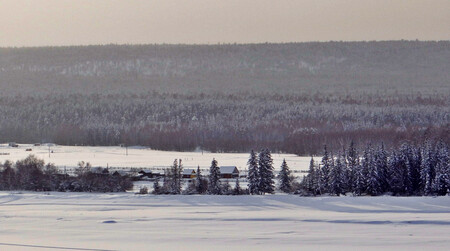
Isolation in the Siberian Taiga
In the cold, vast, and desolate Siberian taiga, one might expect to find dense spruce trees, meandering streams, and maybe a few elusive wolves. Yet, in the summer of 1978, a group of Soviet geologists stumbled upon a remarkable discovery — a family that had been living in isolation for 42 years.
The Discovery
The expedition, led by Galina Pismenskaya, was flying over the Abakan mountain range when the pilot noticed something unusual peering through the trees. The team, surprised to find a rudimentary cabin in a supposedly uninhabited area, decided to land. The remote location was more than 240 km from the nearest settlement, and even the Soviet authorities were unaware of its existence.
A Cabin in the Wilderness
Upon approaching the cabin, the geologists were struck by the primitive structure, built with bark, branches, and wood. An old man appeared, barefoot and wearing ragged clothes, who initially seemed frightened by the unexpected visitors. As they stepped inside, the geologists discovered that the man, Karp Osipovich Lykov, lived there with his four children. Their shared wooden home lacked rooms and was filled with smoke from their cooking.
The Lykov Family: A Tale of Survival
The Lykov family, comprised of Karp and his children — Savin, Natalia, Dmitry, and Agafia — had sought refuge in the taiga to escape religious persecution as ‘Old Believers,’ a sect that split from the Russian Orthodox Church. Their decision to move was prompted by the tragic death of Karp’s brother at the hands of a patrol in 1936. Gathering only a few seeds, basic tools, and their clothing, Karp fled with his wife, Akulina, and two children into the wilderness.
Life in Isolation
During their years of solitude, the Lykovs lived a life aligned with their religious beliefs, cut off from the world’s developments. Time, politics, and technology stood still for them, as they remained unaware of significant events like World War II and the Moon landing. The family faced numerous challenges, including “years of hunger” in the late 1950s and harsh winters that forced them to rely on whatever resources the taiga could provide.
Consequences of Isolation
Their prolonged isolation bore dire consequences. When the geologists found the Lykovs, Karp requested only salt, reflecting their basic needs. Over time, as they were introduced to the outside world, they started accepting modern comforts like clothing and tools. However, tragedy struck when three of Karp’s children died due to illnesses possibly exacerbated by contact with outsiders. Only Karp and Agafia survived to tell their tale.
A Reluctant Shift
Karp Lykov passed away in 1988, leaving Agafia as one of the last remnants of their extraordinary life story. Despite offers of modern living and community support, she chose to remain in the taiga, stating, “You can’t breathe” in the cities, preferring the peace of her natural surroundings over modern comforts.
Conclusion: A Fascinating Yet Harsh Reality
While the story of the Lykov family captivates many, it serves as a reminder of the stark and often brutal realities of life in isolation. Their years in the Siberian wilderness were not idyllic but marked by hardship and survival. This extraordinary narrative raises profound questions about human resilience and the complexities of societal isolation.