
The Isolated Caves of Las Gobas
In the year 711, an Umayyad army crossed the Strait of Gibraltar and put an end to the Visigoth kingdom in less than a generation. This initiated significant upheaval across the Iberian Peninsula, leading to the birth and fall of various kingdoms and its eventual transformation into a modern Europe. However, north of Burgos, an isolated community seemed untouched by these monumental shifts.
Where Was This Community?
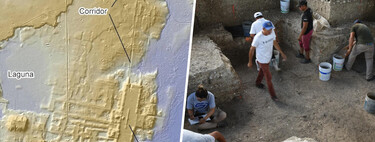
Located in the county of Treviño, near the town of Laño, Las Gobas encapsulates a unique historical tableau. This ancient rock community stands out as one of the most remarkable medieval sites on the Iberian Peninsula. The inhabitants of Las Gobas carved out their churches, homes, and graves within the limestone cliffs, living in this secluded paradise for centuries without engaging with the broader world.
Insights from DNA Studies
Recent archaeological excavations have uncovered the remains of 41 individuals from this era, enabling researchers to extract their DNA. While we lack time machines to glimpse the past, scientific studies have unveiled significant details. The settlement thrived from the mid-6th century to the 11th century, with continuous use of its cemetery from the 7th to the 11th century. Surprisingly, it appears that the population remained remarkably homogenous.
The Dark Reality of Inbreeding
One shocking revelation from the DNA analysis is that around 61% of individuals examined exhibited signs of consanguinity, indicating widespread inbreeding. This wasn’t a subtle issue; researchers found evidence of marriages between siblings and even between parents and children. Thus, the genetic diversity within this population was heavily reliant on the rare foreign women who came to marry.
Violence and Disease: A Harsh Existence
Far from the assumption that isolation fosters peace, the first centuries of habitation at Las Gobas witnessed significant violence. Analysis of the skeletal remains revealed serious injuries consistent with sword impacts, indicating a society plagued by internal strife.
Adding to their woes, the 10th century heralded an invisible enemy: pathogens. Metagenomic analysis indicated an outbreak of smallpox, a discovery that not only marks the oldest documented evidence of the disease in Southern Europe but also provides insights into its origins and transmission paths.
The Pathogen’s Journey
Fascinatingly, the strain of smallpox found in Las Gobas seems to share similarities with Nordic and European variants. Researchers suggest that the disease likely entered this isolated enclave through early European pilgrimage routes, particularly the initial phases of the Camino de Santiago. Despite the community’s attempts to remain isolated, the emerging religious and commercial traffic eventually breached this epidemiological bubble.
Conclusion
The story of Las Gobas invites reflection on the complex interplay of isolation and connectivity in historical communities. The findings not only illuminate the challenges faced by this unique society but also shed light on broader historical narratives in Europe.