
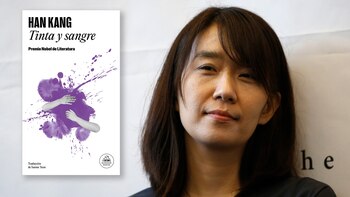
Exploring Themes in ‘Ink and Blood’
Han Kang’s latest publication, Ink and Blood, signifies a profound exploration of life, death, and the intersection of art and science. Originally published in 2010, this work is now available to Spanish-speaking audiences for the first time, thanks to the translation by Sunne Yoon. As a follow-up to her celebrated novels The Vegetarian and Greek Class, this novel delves deeper into the psychological thriller genre, intertwining individual trauma with broader existential themes.
The Plot Overview
The narrative revolves around Cheonghee, a playwright and translator who embarks on a quest to investigate the mysterious circumstances surrounding her childhood friend Inju’s death. Officially deemed a suicide in the Misiryeong mountain pass, Cheonghee harbors doubts about this assumption, suspecting hidden motives underlying the tragedy. Throughout her investigation, Cheonghee encounters Kang Seogwon, an art critic intent on crafting a biography of Inju that shapes her legacy in a certain way. This dynamic complicates matters, as Inju’s uncle Dongju—Cheonghee’s former mentor—emerges as a pivotal figure in both Cheonghee’s life and the narrative’s emotional landscape.
The Layers of Narrative
The structure of Ink and Blood artfully intertwines the investigation into Inju’s death with Cheonghee’s confrontations with her own past and traumatic experiences. Themes of cosmic genesis and human connection are explored through Cheonghee’s relationship with Dongju, who introduces her to the ancient art techniques of ink expansion on hanji paper. Here, the novel dynamically links artistry, trauma, and the passage of time, suggesting that personal experiences can mirror larger existential themes.
Scientific Elements and Artistic Creation
Notably, the concept of Planck time—a fundamental unit in physics—permeates the narrative. This reference not only symbolizes the universe’s origin but also intertwines with the story’s human experiences. The integration of scientific concepts alongside episodes of domestic violence and personal memories creates a rich tapestry of narrative complexity. This architecture is further enhanced by chapter titles like The Hidden Side of the Moon and The Paradox of the Black Sky, which evoke curiosity and deepen the reader’s engagement.
The Conflict and Resolution
The tension between Cheonghee and Kang develops into a poignant exploration of truth. As Cheonghee seeks evidence to refute the dominant narrative surrounding Inju’s life and death, physical manifestations of her moral anguish begin to surface. This conflict ultimately reflects the interplay between her external inquiries and internal struggles, blurring the lines between personal and collective trauma.
Universal Themes and Intimate Portraits
As readers navigate through Ink and Blood, they encounter a delicate balance between the intimate and the universal. Each character embodies various emotional complexities and unresolved traumas, emphasizing the shadows that linger even in close relationships. In this way, Han Kang continues her exploration of the human condition—marked by a blend of brutality and delicacy, existential reflection and sensuality.
Overall, Ink and Blood stands as a testament to Han Kang’s evolution as a novelist, enhancing her legacy with a story that is both intensely personal and astronomically significant.