
Recent Earthquake Activities Shake Lima and Callao
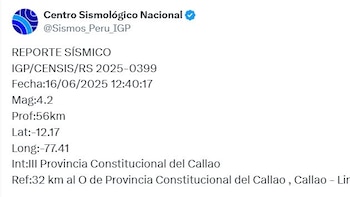
On June 16, 2025, just 24 hours after a significant earthquake shook the Peruvian capital, a new tremor of magnitude 4.2 was felt in Lima and Callao. This unexpected seismic event heightened the anxiety of residents still reeling from the previous quake. The Instituto Geofísico del Perú (IGP) confirmed the earthquake’s magnitude and epicenter, focusing again on the Callao region.
The tremor’s epicenter was located approximately 32 kilometers west of Callao, with a depth of 56 kilometers, according to reports published by the IGP. The earthquake struck at 12:40 PM, registering a Magnitude of 4.2 on the Richter scale.
Figcaption: Sismo de 4.2 de magnitud se registró este mediodía en el Callao
As per official reports, the intensity of the earthquake was classified as Level III, which indicates that the tremor was felt mainly by individuals located in higher floors of buildings. Fortunately, there were no widespread alarms or interruptions in basic services. The IGP promptly published information regarding this seismic event through their alert systems to keep citizens and local authorities informed.
Specialists from ASISMET suggested that this recent tremor may be a replica of the 6.1 magnitude earthquake that occurred the day before. Although slightly less intense, people from districts such as Mala, Chancay, and central Lima felt the tremors. Fortunately, no damages were reported, but the frequency of these seismic activities is a growing concern among the public.
Peru is located in a region known for its significant seismic activity. This is primarily due to the Nazca Plate, which is an oceanic plate that subducts beneath the continental South American Plate. This geological phenomenon, known as subduction, occurs along the country’s coastline, accumulating energy that often releases in the form of earthquakes, making such tremors a common occurrence in the region.
The Evacuation of Key Institutions
Following the recent quake, personnel from the Specialized Prosecutor’s Office for Women in Puente Piedra had to evacuate their offices, ensuring the safety of educational materials and documentation crucial for ongoing legal procedures. Their office, located at Panamericana Norte, had already undergone a preliminary inspection for structural integrity after the earlier tremor, which had left visible damage.
According to collected testimonials, although the building was deemed safe internally, it was decided as a precautionary measure to allow employees to work remotely while structural assessments continued. The evacuation was executed smoothly thanks to emergency training and protocols established within the institution.
The recent seismic activity remains a pressing issue, especially after the 6.1 magnitude earthquake that raised public alarm. Experts such as Hernando Tavera from the IGP emphasized a significant concern: a potential 8.8 magnitude earthquake, which would be approximately 500 times more powerful than the recent tremors, poses an imminent catastrophic risk to urban areas.
Structural Vulnerabilities and Urgent Calls for Action
Lima’s vulnerability to a devastating earthquake has sparked heightened concerns among experts. A significant factor contributing to this risk is the rampant unregulated construction that characterizes many sectors of the city. Tavera reported that almost 80% of residential buildings are not designed or equipped to withstand substantial seismic activity, raising alarms about the potential collapse of structures during a significant earthquake.
The structural deficiencies could lead to catastrophic outcomes for thousands of residents, particularly in informal settlements, where construction quality is often subpar. The call for urgent action has never been louder, as experts emphasize that the recent tremors should serve as a crucial warning. Lima must prioritize preventative measures, community education, and structural reinforcements to increase earthquake resilience across the capital.
In 2025 alone, the Instituto Geofísico del Perú (IGP) recorded 399 earthquakes, averaging more than one tremor per day. In June, 29 tremors were reported, with most not causing major damage. However, as public perception intensifies regarding these events, local authorities emphasize the need for preparedness.
In conclusion, the frequency and severity of these recent earthquakes remind us of the pressing need for a proactive approach to urban planning and earthquake preparedness. The Peruvian government, alongside local agencies, must work collaboratively with communities to enhance structural safety and promote effective emergency evacuation plans. By addressing these critical issues, we can better protect the citizens of Lima and Callao and reduce the risks associated with future seismic events.