
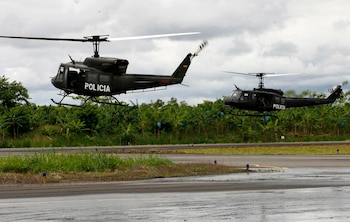
On the morning of Thursday, August 21, 2025, two helicopters of the National Police of Colombia were attacked by a drone equipped with explosives while conducting operations against illegal armed groups in the department of Antioquia . This incident highlights the escalating conflict and the innovative tactics being employed by criminal organizations in Colombia.
According to preliminary reports, the attack occurred in the rural municipality of Amalfi . The exact number and condition of the crew members aboard the helicopters remain unconfirmed, raising concerns about their safety. This attack is part of a broader trend of increasing violence in the region, fueled by the ongoing battle against drug trafficking and armed groups such as the Gulf Clan and the National Liberation Army (ELN) .
The use of drones by illegal groups represents a significant shift in tactics within the Colombian conflict. Traditionally, these groups have relied on ground and aerial attacks using more conventional weapons. The deployment of drones not only enhances their operational capabilities but also complicates the response efforts of security forces. The Colombian government is now facing the challenge of adapting to this new warfare technology.
The Rising Threat of Drones in Colombia
Drones have become increasingly popular among armed groups around the world, and Colombia is no exception. Their affordability and accessibility make them an attractive option for groups engaged in illicit activities. In recent years, there have been multiple instances of drones being used to transport drugs , conduct surveillance , and execute attacks . The explosive attack on police helicopters marks a troubling escalation in this trend.
The Colombian government has stated that they are committed to enhancing their surveillance and defense capabilities to counter the drone threat. This includes investing in anti-drone technology and improving inter-agency collaboration to ensure a swift and effective response to such attacks. However, implementation remains a significant challenge due to funding limitations and the vastness of the Colombian terrain.
Political Ramifications and International Implications
This incident raises important political questions regarding the effectiveness of the Colombian government’s approach to the ongoing conflict. As violence escalates and more advanced tactics are employed by armed groups, public opinion may shift in favor of more aggressive actions against these organizations. The international community , particularly the United States , has a vested interest in the stability of Colombia due to its crucial role in the global drug trade and regional security.
The ongoing drone warfare also poses diplomatic implications . As Colombia seeks to bolster its military capabilities with international assistance, there may be concerns about the use of force and the potential for increased civilian casualties. The challenge will be to address these security issues while adhering to human rights standards and maintaining public trust.
Community Response and Civilian Safety
The response from local communities has been a mix of fear and anger. Many citizens living in regions afflicted by drug violence are calling for more government intervention and protection from armed groups. However, increased military presence can lead to unintended consequences, such as civilian harm and displacement. Striking a balance between security and human rights is imperative.
In recent years, numerous peace initiatives have been launched, aiming to address the underlying social issues driving the conflict. Initiatives such as land reform, educational programs, and economic development are essential for long-term stability. Yet, the immediate threat posed by armed groups and their use of drones remains a pressing issue that requires urgent attention.
General News – 2