
Time passes so quickly that it’s hard to believe that the new iPhones have been in stores for more than a month. The truth is that Apple has made a move again, and it has done so with a model that renews materials and promises a more balanced experience. But after three very continuous generations, the question is once again the same: has anything really changed? In a new 24/7 from the Xataka YouTube channel, we have tested it for 30 days to see if these changes are noticeable on a daily basis or if history repeats itself.
Over the course of 30 days, Ana Boria has lived with the iPhone 17 Pro Max in various situations: recording, working, playing, or taking photos outdoors. Their goal has been to determine if the change in materials and the new design translate into a different experience or if day-to-day usage feels the same as before. On Xataka’s YouTube channel, we previously put the Freestyle Libre 2 glaucometer to the test for a week, and we also dedicated a month to the Xiaomi 15 Ultra and the Smart Band 10. This 24/7 approach continues with prolonged use to understand the product beyond the technical specifications.
iPhone 17 Pro Max: A Month of In-Depth Testing
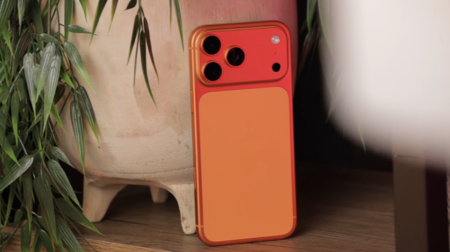
The change of materials is noticeable from the first moment. The iPhone 17 Pro Max leaves titanium behind to adopt an aluminum chassis with more curved edges and a more pleasant touch finish. Apple justifies this step as a thermal improvement, and in tests, a more uniform distribution of heat has been noted when the phone operates at its limit. The flip side is that aluminum is softer and shows marks easily. However, for Ana, the improved sensation of use compensates for that loss of hardness: “In that sense, I find that the new design is much more successful and comfortable.”
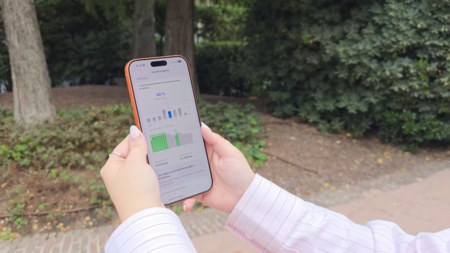
After a week of use, our colleague focused her attention on the screen and sound , two areas that this year have received minor adjustments. The panel now reaches a maximum brightness of 3000 nits , which improves contrast and adds a new anti-reflective coating. In practice, the experience feels similar to before: outdoors, it looks perfect, but not significantly better than previous models. So we wonder whether the anti-glare coating actually makes a noticeable difference outside a controlled environment.
The new A19 Pro chip is responsible for ensuring everything works seamlessly. Ana acknowledges that the jump in power isn’t as tangible as one might expect: “In practice, I cannot tell you that this increase in performance is noticeable.” What does change, however, is heat management. Thanks to the aluminum body and a vapor chamber, heat is distributed evenly, eliminating localized overheating. The result is a more stable phone that can endure intense sessions without losing fluidity or reducing brightness, an advantage for users who demand high performance.
The iPhone 17 Pro Max cameras maintain a high standard, but the new 4x telephoto lens steals the spotlight. Its more practical distance offers improved usability, though users have noted that its behavior isn’t always predictable: “At no point do you know with which lens the photograph is being taken.” On the positive side, the 18 MP selfie camera allows for easy reframing, and the stabilizer “was good before, but now it’s incredible.” Is this truly the advancement we were hoping for in mobile photography?

Reflecting on the month of testing, Ana summarizes it succinctly: “We have the best iPhone Pro that has ever existed, but it doesn’t reinvent the wheel.” The nuances, surprises, and comparisons can only be appreciated through practical usage. The final verdict and more details can be found in the video on Xataka’s YouTube channel.
Images | Xataka
In Xataka | Huawei Pura 80 Ultra, analysis: the dethroned king returns to recover his crown with a telephoto lens.