
The Marvel of Bioluminescence in Australia
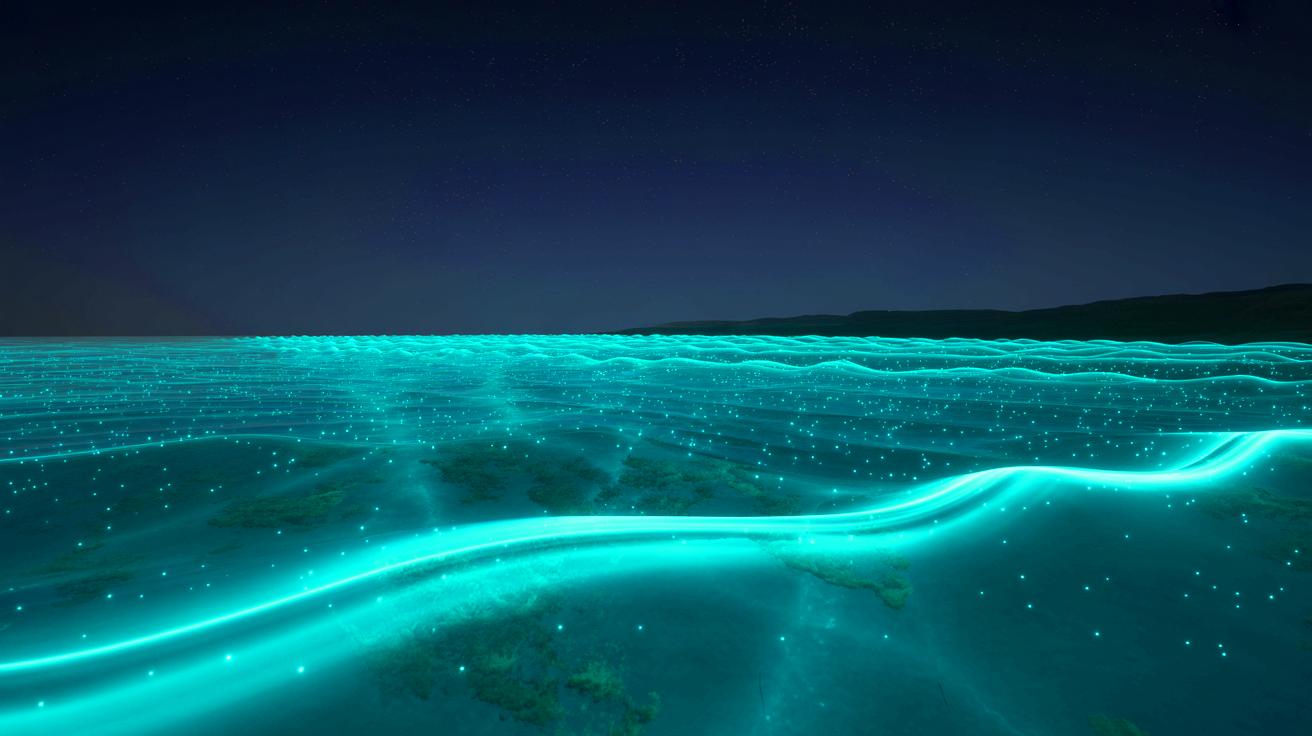
A spectacular bioluminescent phenomenon has been recently observed off the coast of Australia, capturing the attention of scientists and marine enthusiasts alike. This extraordinary occurrence was detected by NASA satellites, revealing a vibrant turquoise glow in the waters of the Tasman Sea. This luminescence is attributed to a significant phytoplankton bloom, an event that poses important ecological implications. Researchers are keenly investigating this natural spectacle, raising critical questions about its origins and its effects on marine ecosystems.
Phytoplankton: A Captivating Visual from Space
The bioluminescence observed offshore began with initial captures by NASA’s PACE satellite, which utilized the Ocean Color Instrument (OCI) for detection. In November 2024, the satellite identified the bright glow radiating along the waters between south-eastern Australia and Tasmania, particularly in the Bass Strait. This area, known for its turbulent currents and climate, is crucial for marine routes leading to Port Phillip Bay, just near Melbourne.
Interestingly, similar blooms have been noted before. In January 2024, the Suomi NPP satellite documented like phenomena via its VIIRS sensor, while Terra and Aqua satellites recorded initial signs as early as December 2023. These repeated observations help scientists grasp and monitor the evolution of these algal blooms, underscoring the significance of satellite data in marine ecosystem studies.
Unraveling the Source of the Glow
The phytoplankton bloom was particularly visible in satellite imagery due to its high chlorophyll-a concentration, a green pigment essential for phytoplankton’s photosynthesis. The vibrant shades, ranging from greenish to turquoise, emerge from the ocean’s surface layer known as the photic zone, where sunlight penetrates. Here, phytoplankton thrive in nutrient-rich waters, supplemented by compounds like nitrogen and phosphorus from the decomposition of marine life.
Jochen Kaempf, an oceanographer at Flinders University, investigated this phytoplankton activity, confirming that "the green filament is unmistakably a phytoplankton bloom extending along the edge of the continental shelf, situated about 150 meters deep." The surrounding blue hues could stem from resuspended sediments in shallow areas or other phytoplankton species contributing to the glow.
Ecological Significance in the Bass Strait
Phytoplankton form the foundation of the marine food chain, and their seasonal blooms promote a vast array of oceanic life. Researchers estimate that up to 80 blue whales flock annually to the Bonney Coast due to these blooms. The whales feast on krill and other small organisms, which in turn consume the phytoplankton. Moreover, the blooms attract sardines, anchovies, tuna, crabs, and numerous fish species, making it a hub of marine activity.
These algae are not only pivotal for marine ecosystems; they play a vital role in global oxygen production and climate regulation. NASA scientists emphasize that these blooms highlight the broader impacts of ocean circulation, nutrient cycling, and seasonal dynamics along Australia’s southern coast. The visibility of bioluminescent phytoplankton from space reveals both the wonder and ecological importance of microscopic marine life.
Questions for the Future
As research continues to uncover the mysteries of these remarkable natural phenomena, a lingering question remains: how could phytoplankton blooms be affected by climate change and future environmental variations? Scientists are pursuing further studies to better understand these complex dynamics and their potential impact on marine ecosystems and global climate.
In light of such discoveries, it becomes imperative to determine how humanity can adapt to these natural changes and what long-term effects they may have on our planet. Will bioluminescent phytoplankton continue to flourish in an ever-evolving world?
In conclusion, the recent bioluminescence observed off the Australian coast serves as a reminder of the incredible mysteries still hidden within our oceans. These phenomena not only fascinate the public but also offer critical insights into the health of our planet’s ecosystems.
| EN BREF |
|
A spectacular natural phenomenon has sparked the curiosity of scientists and the general public along the southern coast of Australia. Captured by NASA satellites, an intense turquoise glow, visible from space, illuminated the waters of the Tasman Sea. This natural manifestation, identified as a bloom of bioluminescent phytoplankton, has significant ecological implications. Researchers are closely interested in this luminous phenomenon, raising important questions about its origin and impact on the marine ecosystem.