
A Ghost Plagues the World: Wine Consumption Falls to Historic Lows
The Decline in Global Wine Consumption
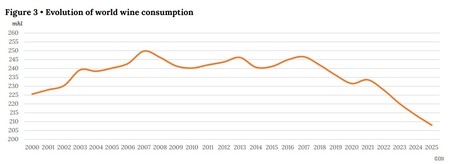
The International Organization of Vine and Wine (OIV) has unveiled shocking statistics indicating a significant drop in global wine consumption, reaching levels not seen since 1957. This decline, detailed in their latest report, shows that 2025 will see wine consumption in the world plummet to around 208 million hectoliters, marking a drop of 2.7% from 2024. For context, that’s a staggering 14% decline since 2018, raising alarm bells throughout the industry.
The Factors Behind the Decrease
Economic Pressures and Changing Habits
The reasons for this decline are multifaceted. Among them are economic pressures, such as inflation and geopolitical tensions, which have undeniably impacted consumer spending. However, the most notable factor is a shift in consumer preferences, particularly among younger generations. These changes in social habits signify a move away from traditional wine appreciation toward alternative beverages.
Regional Impacts
Notably, the decline isn’t uniform across the globe. China has experienced the largest contraction in wine consumption, with a staggering drop of about two million hectoliters yearly since 2018. Similarly, the French market is also seeing a consistent downturn, while the United States saw a 4.3% contraction in 2025.
The State of Global Production and Exports
Shrinking Vineyard Areas
In addition to plummeting consumption numbers, the area devoted to vineyards has also decreased, from 7.388 million hectares in 2020 to 7.034 million hectares in 2025. This represents the sixth consecutive year of contraction, suggesting that the global wine industry is not just facing a consumption crisis but also a production one.
Declining Exports
The overall exports have fallen by 4.7% in volume and 6.7% in monetary value, reaching only 33.8 billion euros in 2025. This situation is exacerbated by various factors, including a decrease in vineyard area, leading to fewer exports since there’s less wine to sell.
The Bright Spots: Emerging Markets
Despite the gloomy forecasts, there are bright spots. Countries like Portugal and Brazil are witnessing growth in both vineyard area and production levels. Although exports are down, the overall value of world trade remains higher than pre-pandemic levels, hinting at stronger market resilience.
Conclusion
The future of wine consumption appears uncertain, with current trends suggesting a prolonged slump unless the industry can adapt to the changing landscape of consumer preferences and economic realities. As vineyards continue to dwindle and consumption falters, the question remains: how can the wine industry revive its historic prominence in a world that seems to be drifting away from it? While 2025 might be a low point, it could also serve as a pivotal moment for re-evaluation and reinvention within the sector.