
Understanding the Impact of Natural Disasters: A Conversation with Rosa María Mateos
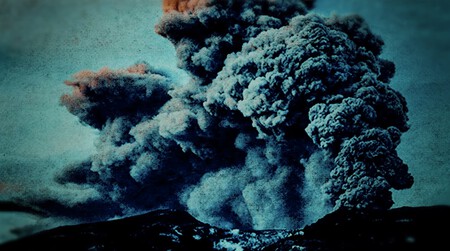
How can an eruption on the other side of the planet lead to a “year without a summer”? Why does an earthquake of seemingly small magnitude devastate a city while a larger one goes almost unnoticed? The truth is that the severity of a natural phenomenon is not solely defined by its magnitude, but by where it occurs, how many people are exposed, and how risks are managed. Gaining insights into these occurrences enhances our perspective on the planet.
The Geology of Risk
In the fourth episode of the talk show “Science and Aside,” host Ángela Blanco engages in a fascinating conversation with Rosa María Mateos, a geologist and director of the Geological and Mining Institute of Spain (IGME-CSIC). With decades of experience in the field, Mateos sheds light on the complex relationship between natural disasters and human populations.
The discussion starts with a seemingly simple yet profound question: what is the most damaging natural disaster? Mateos calmly replies, “It depends where you are and where you live.” This statement highlights an essential truth: there are no hierarchies between volcanoes, earthquakes, or tsunamis. Understanding the risks associated with these events requires looking at the geology and historical context of a region.
For instance, living in the Canary Islands, with their significant volcanic activity, poses different challenges compared to residing in Madrid, where volcanic threats are virtually nonexistent. “The danger changes with the map,” Mateos states, emphasizing the need for a contextual understanding of geological hazards.
A Historical Perspective
Mateos cites a historical event that nearly wiped out Homo sapiens: the eruption of the Toba volcano in Indonesia, approximately 74,000 years ago. This mega-eruption is critical to understanding the potential consequences of geological events on human survival.
In discussing earthquakes, Rosa explains that not all seismic events are assessed equally. The magnitude of an earthquake is often measured on a logarithmic scale, which can be misleading if not properly understood. “An earthquake of magnitude four is not merely double that of magnitude two,” she clarifies. “The difference is exponential.” Each increase of one unit on the scale represents a significant multiplication of the energy released, thus transforming an earthquake into a force of colossal proportions.
A historical case that exemplifies this is the Lisbon earthquake of 1755, which devastated the Portuguese capital and reached the coasts of Finland. Beyond its tremendous magnitude, this disaster initiated a new way of thinking in scientific communities and informed future risk assessments.
Understanding Danger vs. Risk
To grasp the differences between disasters that dominate headlines and those that barely register, Mateos introduces an essential distinction: “We geologists talk about two very different concepts that we often confuse—danger and risk.” Danger refers to the potential for a natural event to occur, while risk takes into account the exposure and vulnerability of populations to that event. This distinction is crucial for effective disaster management and mitigation strategies.
In the episode, Rosa elaborates on how natural phenomena cannot be avoided, but their effects can certainly be mitigated. Observation and knowledge serve as crucial tools for anticipating risks and adapting to living with them.
The Importance of Preparedness
The conversation with Rosa María Mateos highlights the crucial need for preparedness and education regarding natural disasters. Awareness and knowledge empower communities to minimize the impacts of such events, fostering resilience in the face of nature’s fury.
In regions with a higher probability of geological events, proactive measures can mean the difference between catastrophe and survivability. Understanding local geology is not merely for scientists but essential for policymakers and residents alike.
Conclusion
The insights offered by Rosa María Mateos serve to remind us that while natural disasters are inevitable, our responses can shape their consequences. By enhancing our knowledge and adopting a proactive mindset, we can better navigate the intricate relationship between humanity and the planet we live on. This discussion invites us to rethink our understanding of risk and embrace a nuanced view of the world’s geological dynamics.