
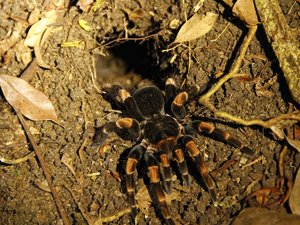
This Monday, July 14, the customs of the city of Cologne in Germany announced in a press release the discovery of mygals hidden in packages that were misrepresented as cookies. It was an overpowering odor that ultimately led to the authorities uncovering the shocking content.
In an astonishing incident, customs officials in Cologne uncovered 1,500 mygals packed inside small transparent tubes. This unexpected find occurred approximately three weeks ago, highlighting ongoing challenges regarding the smuggling of exotic species. The mygals , commonly known as tarantulas, are typically found in warmer climates, particularly in tropical regions such as Vietnam, where these particular specimens originated.
The authorities became aroused by an alarming pestilent smell upon opening the package, which, according to the customs officials, “did not correspond to the supposed content of seven kilos of cookies.” This irregularity prompted a deep examination of the package and ultimately led to the shocking discovery within.
A Foul Odor
As noted by Jens Ahland, spokesperson for the main customs office in Cologne, this was an “exceptional seizure” that even left seasoned officials taken aback. Many of the mygals did not survive the rigors of air transport; however, those that did were handed over to specialized institutions for their care. This incident underscores the importance of vigilance whenever dealing with international shipments , particularly those involving wildlife and exotic species.
A criminal procedure has been initiated against the recipient of the package, a resident of the Sauerland region, which is located relatively close to Cologne. These types of operations reveal the ongoing issue of wildlife trafficking and the various challenges it poses to customs and authorities worldwide.
Smuggling exotic animals, such as mygals, not only introduces risks associated with transporting endangered species but also raises concerns about potential ecological impacts. When these animals are introduced into non-native environments , they can sometimes disrupt local ecosystems, presenting an array of challenges both environmentally and economically. National and international regulations exist to prevent such activities, but enforcement remains a persistent challenge!
The recent seizure in Cologne is merely one example among many, as wildlife trafficking is recognized as one of the most lucrative criminal enterprises globally, often rivaling illegal drug and arms trades. As global demand for exotic pets and products continues to rise, officials must remain ahead of the game to tackle these criminal networks effectively.
This operation also shines a light on the role of customs and law enforcement in protecting biodiversity . As these agencies become increasingly advanced in their technology and techniques for screening and inspection, the ability to detect such illicit shipments will continue to evolve. Public awareness and education concerning the ecological consequences of wildlife trafficking are essential in creating a more informed society that can recognize and report suspicious activity.
The courage and diligence displayed by the customs officers in Cologne in this incident should be applauded. Their actions not only prevented a potential ecological threat but also highlighted the ongoing battle against wildlife trafficking. It is essential for citizens to understand the importance of supporting legislative efforts to strengthen protections for wildlife and fostering cooperation across borders to combat this pressing issue further.
The culmination of such events serves to remind us of the fragility of our ecosystems and the responsibilities we carry to protect them. Wildlife trafficking is not merely a legal violation; it is a moral obligation that we must collectively address to ensure a balanced future for our planet.