
Current Challenges in the Alcohol Industry
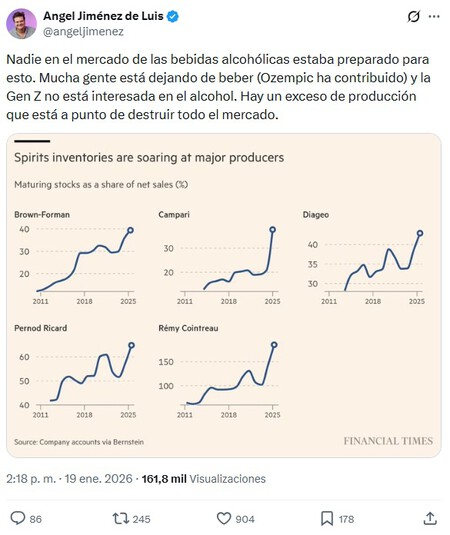
The alcohol industry is facing unprecedented challenges, exacerbated by factors such as trade wars and fluctuating consumer interests. Companies are now grappling with an overwhelming inventory valued at approximately $22 billion. This surplus, primarily consisting of excess whiskey, cognac, and tequila, poses a significant threat to the financial stability of major manufacturers.
Unprecedented Inventory Levels
The Financial Times recently highlighted the severity of the situation, referring to it as a “lake of liquor.” Prominent industry players, including Diageo, Pernod Ricard, Campari, Brown Forman, and Rémy Cointreau, are struggling with stocks that exceed their annual revenues. For instance, Rémy Cointreau has amassed aged spirits worth €1.8 billion, nearly double its income and close to its total market capitalization.
Global Demand Declines
The growing stock levels are not confined to high-end spirits. The Mexican tequila industry reported a staggering 525 million liters stockpile at the end of 2023. This amount is alarmingly close to the country’s annual production, indicating that distillation far exceeds current demand. Analysts warn that if this trend continues, significant financial repercussions could arise, leading to potential price wars within the sector.
Factors Contributing to Inventory Accumulation
Economic Uncertainties
Several factors underlie this accumulation, notably economic fluctuations and changing consumer behaviours. During the pandemic, alcohol consumption surged, prompting companies to ramp up production. Yet, as markets normalized, inflation began to deter consumers, resulting in a downturn in sales.
Trade Wars and Production Halts
The ongoing trade war has further complicated the landscape. Higher tariffs have led companies like Jim Beam to suspend production at primary distilleries. The trouble with this strategy is that it could harm future supply, as aging spirits require years to mature.
Changing Consumer Preferences
Generational Shifts
Recent surveys indicate that Generation Z and younger millennials are drinking less alcohol than previous generations. The health consciousness of younger consumers may contribute to this trend, as many are prioritizing physical well-being over alcohol consumption.
Historical Consumption Trends
Data from Our World in Data reveals a broader global decline in alcohol per capita consumption over the past decades. Findings from Gallup also indicate that U.S. alcohol consumption has dropped to its lowest levels since 1930. Such trends raise concerns about the future viability of the alcohol industry, as shifting habits may not be a temporary phase.
Future Implications
A Ticking Time Bomb
The surplus stock poses immediate concerns but could also lead to a more volatile market in the future. Analysts fear that the combination of high inventories and declining sales could result in a price war among major producers, further straining their finances.
Navigating the New Normal
In response, manufacturers are already adopting more cautious production strategies. However, the challenge remains significant, as halting production today can have long-term negative effects on supply. The industry’s ability to adapt to these evolving challenges will ultimately determine its resilience.
In conclusion, the alcohol industry is at a crossroads, grappling with an unprecedented stockpile, shifting consumer behaviors, and broader economic pressures. Stakeholders must navigate these complexities carefully to ensure sustainable growth in the face of an uncertain future.