
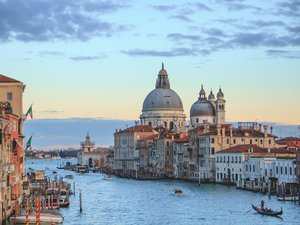
A Briton and his Romanian companion were expelled from Venice after plunging into the Grand Canal from the Academy Bridge. They join the long list of visitors sanctioned for inappropriate behavior in the city of Doges.
Venice does not joke with her heritage or with her canals. A couple of tourists, a 35-year-old Briton and a 25-year-old Romanian , were arrested after jumping into the Grand Canal from the famous Academy Bridge.
Denounced by gondoliers, the two visitors each received a fine of 450 euros and an expulsion of 48 hours , according to information from the municipal police relayed by CNN. This is the 1,136th sanction inflicted since the start of the year for tourist incivility in the city.
A Banned and Dangerous Activity
Swimming in the Venetian canals is strictly prohibited, as reminded by the city’s Ministry of Tourism. The reasons for such strict regulations are multiple: dense traffic of boats, significant safety risks, and especially the doubtful quality of water . Despite these dangers, some tourists continue to give in to the temptation, often sharing their audacious exploits on social media platforms.
The Weight of Overtourism
For local authorities, these behaviors are a direct consequence of overtourism , which has been affecting Venice for several years now. The municipality, already under significant pressure to preserve its UNESCO-classified heritage , has been mandated to multiply sanctions in an attempt to mitigate these disruptions. Public spaces are often crowded, and violations of local laws have risen sharply, as exemplified by the expulsion of the two tourists.
Venice has long been hailed as a cultural treasure , attracting millions of visitors every year drawn to its stunning architecture, historical significance, and picturesque canals. However, this influx has generated an urgent need for sustainable tourism practices to balance the interests of visitors with the welfare of the local community and the protection of Venice’s unique heritage.
The city has previously enacted various measures aimed at limiting the number of tourists in certain areas, especially around its most iconic sites. Some strategies include implementing entrance fees , restricting the size of cruise ships, and promoting off-peak travel in an effort to disperse crowds. Yet, despite these initiatives, irresponsible behaviors persist, tarnishing the reputation of the city and endangering its fragile environment.
Local residents express frustration at the ongoing disregard for regulations . “It’s not just about a simple swim; it’s about respecting our home,” one gondolier shared. Many locals feel a profound connection to Venice, viewing it as an integral part of their identity rather than just a tourist destination. Their cries for preservation often go unheard against the overwhelming tide of tourist activity.
Moreover, as incidents like this continue to arise, Venice’s tourism authorities have emphasized the importance of educating visitors about local customs and the reasons for various restrictions. They see the potential for collaboration with travel platforms and tourism boards to spread awareness about responsible travel practices. Such collaboration could help in cultivating a culture of respect that honors both the city and its history.
As Venice grapples with the repercussions of overtourism and misguided behavior, the expulsion of tourists for disobeying local laws serves as a reminder of the delicate balance required for tourism to coexist with preservation efforts. While the allure of Venice remains undeniable, it is crucial that visitors engage respectfully with these rich, centuries-old traditions. The city of canals must be viewed not just through the lens of tourism but as a living, breathing community filled with history, culture, and legacy worth protecting for future generations.