
Revolutionizing Humanoid Robots: The Future of Nonverbal Communication
When we think of a convincing humanoid robot , we often imagine them making eye contact, blinking, and utilizing gestures that enhance the words they convey. Robotics is advancing at an unprecedented pace, and while there are machines capable of performing complex acrobatics, they still often seem more mechanical than human. A crucial element that remains missing for fluid interaction is the nonverbal communication that humans use instinctively. Recently, advancements and experiments in China have begun to address this challenge.
From Muscle to Expression. For many years, the goal was to create robots capable of autonomous movement and durability in various tests. While significant strides have been made in mechanical reliability, there’s a new challenge on the horizon: mimicking the subtle nonverbal signals that humans naturally employ. Whether it’s a gesture of approval or a look of surprise, these expressions are essential for authentic dialogue between humans and machines.
A Head that Gestures. Enter the Chinese company Aheadform , which has unveiled a prototype that exemplifies this transition. In a recent video posted on YouTube, viewers can see a robotic head that blinks, nods, and tracks its environment with a surprisingly lifelike gaze. Founded in 2024, Aheadform aims to create more natural interactions between people and machines by incorporating advanced language models integrated with realistic facial expressions that allow for real-time responses.
Under the Surface: To achieve this lifelike appearance, the prototype, named Origin M1 , employs brushless motors —small and silent devices that coordinate precise movements. This model comprises up to 25 of these actuators that control various expressions. Hidden within the robot’s pupils are cameras that register its surroundings, complemented by microphones and speakers for real-time interaction. This intricate combination helps explain the subtle nuances of its movements and responsive capabilities.
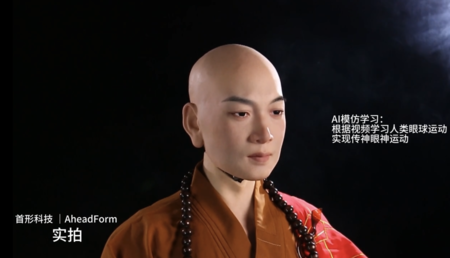
<span>Integration of a robotic head of Aheadform into an experimental body</span>Aheadform asserts that the utility of these developments transcends mere technical demonstration. The company envisions applications in customer service, education, and healthcare—fields where trust is fostered through gestures and expressions. The idea is simple: a robot that smiles or nods feels more relatable than one with a neutral expression. However, these are only ambitions for now; the models are not yet commercially available.
Academic Support. The work behind this prototype is also rooted in rigorous academic research. In a publication in Science Robotics in 2024, Yuhang Hu and collaborators presented a robot capable of predicting and replicating human expressions in real-time. This research provides compelling evidence that synchronized mechanical responses based on real-time facial recognition are indeed possible. While it’s unclear if the current prototype utilizes the same technology, it aligns with the direction outlined by Aheadform.
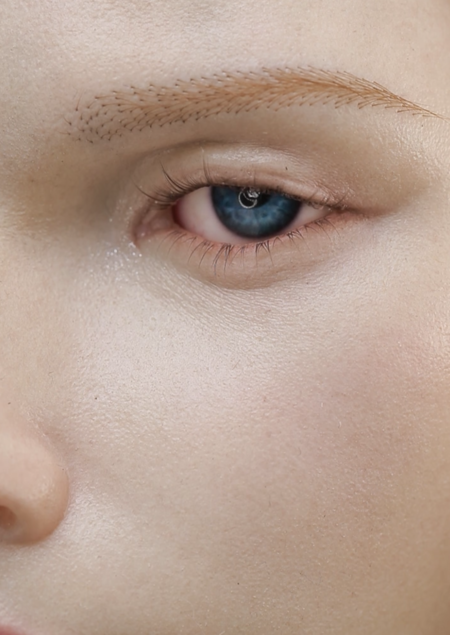
<span>Aheadform works on robotic heads featuring hidden cameras in their pupils</span>A Commitment to Advancement. The ambition of China to position itself at the forefront of humanoid robotics is evident. Efforts extend beyond expressive heads; complete bodies are also being tested in public exhibitions. At the recent CMG World Robot Contest Series in Hangzhou, multiple Unitree G1 robots showcased their skills in a televised kickboxing match, demonstrating remarkable coordination and agility. Such displays enhance the narrative of a nation determined to dominate the robotics sector.
One of the latest spectacles was the Beijing Half Marathon , where 21 robots ran alongside human participants. While the organizers emphasized the uniqueness of the event, it did highlight some limitations, such as the need for constant technical support, battery swaps, and designated routes.
As we continue to explore the boundaries of robotics and humanoid interaction, it is clear that the journey is just beginning. The integration of nonverbal communication will redefine how we understand and interact with machines.