
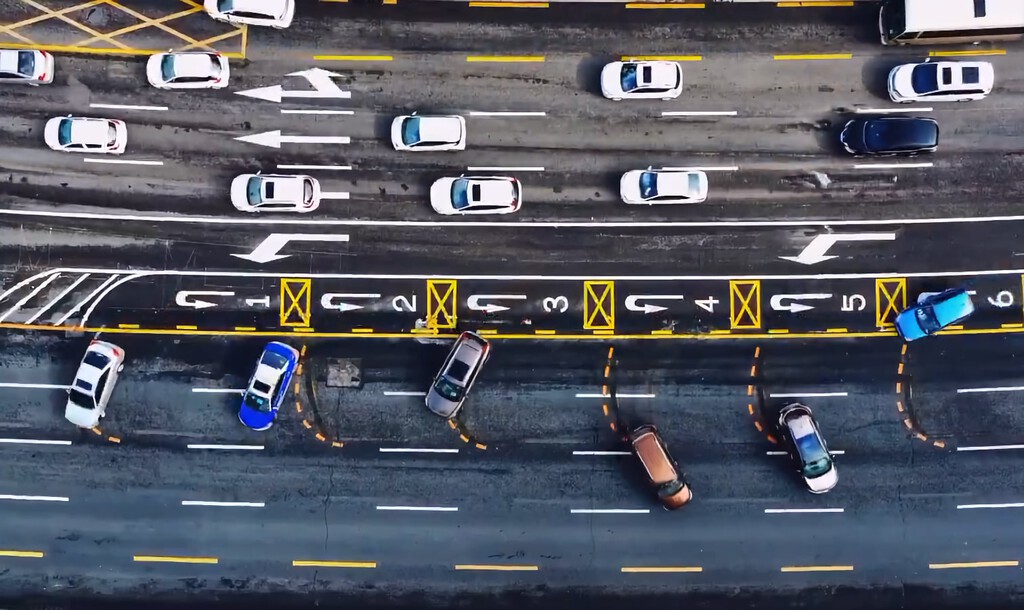
Revolutionary U-Turn Design in Jinan, China: A Solution for Efficient Traffic Control
Navigating through the chaotic streets of modern cities can often be a frustrating experience . The inconvenience of missing a highway exit or having to make tricky U-turns is all too familiar to drivers. In an effort to improve this situation, the city of Jinan , located in Shandong, China, has implemented a groundbreaking solution: the U-Turn lane , popularly referred to as the “U-turn.” This simple yet effective design seeks to simplify the process of changing directions while enhancing overall traffic flow .
The U-Turn Concept: How It Works
The essence of the U-Turn lane lies in its innovative design aimed at facilitating safer and quicker direction changes. Traditional roundabouts and turning lanes can become impractical on multi-lane highways. While drivers typically have the option of turning at the next block, it often leads to increased travel time and frustration.
In Jinan, the U-Turn lane is strategically positioned alongside the median. This lane is intended for vehicles not making a conventional left turn but instead executing a sharply curved maneuver to join the opposite direction of traffic. The concept ensures that the U-turn is executed seamlessly, allowing multiple vehicles to turn simultaneously.
Safety Measures in Action
Despite the apparent advantages of the U-Turn lane, there are valid concerns regarding safety. As shown in various videos released by local news agencies, vehicles line up in designated squares, patiently waiting for their turn. A carefully calibrated traffic light system regulates the flow, ensuring that when the light turns green for the U-turn lane, opposing traffic is halted.
Non-continuous lines painted on the road serve as visual guides, indicating to drivers exactly where to position their vehicles. This combination of traffic lights and road markings aids in maintaining order amidst what could potentially be chaotic scenarios.
Addressing the Risks Associated with U-Turns
However, the implementation comes with inherent risks. As noted in videos shared by news outlets, one significant concern involves the speed and behavior of vehicles already traveling in the opposing direction. Although traffic lights are intended to prevent accidents, there remains a risk of collisions if drivers disregard them or exceed speed limits.
Moreover, the architecture of a U-turn lane may inadvertently encourage reckless behaviors among drivers eager to make their turn. Close quarters while making an extremely tight U-turn can lead to scraping and clashing between vehicles. In recent footage, multiple drivers have had to slow down or even adjust their trajectories to avoid potential accidents, underscoring the pressing need for driver awareness in these scenarios.
Global Perspective on U-Turns
Interestingly, the concept of the U-turn lane is not exclusively Chinese . Several countries, including the United States and Taiwan , have adopted similar designs. However, variations exist in how these U-turns are implemented. In the U.S., the regulations can differ significantly by state, ranging from simple dashed lines to sophisticated traffic light controls. An example of this can be seen in Florida , where U-turn regulations also emphasize driver compliance and safety.
In Spain, the experience of U-turns differs dramatically due to the design and layout of the roadways. While the U-turn lane in Jinan stands out for its capacity to accommodate a high volume of simultaneous turns, other regions may have adapted the concept to fit their specific traffic patterns.
Considerations for Future Implementation
As urban centers continue to expand, the need for efficient traffic solutions becomes increasingly critical. Jinan’s U-turn lane represents a creative approach to managing complex traffic systems. The design is promising not only for enhancing the flow of traffic but also for reducing travel stress among drivers.
Conclusion
Although innovative, the U-turn lane in Jinan serves as a reminder of the complexities involved in urban planning and traffic management. While the benefits of facilitating quick changes in direction are evident, it is essential that safety remains a priority. Continuous monitoring and improvements will be necessary as cities experiment with innovative designs that aim to simplify the often convoluted experience of city driving.