
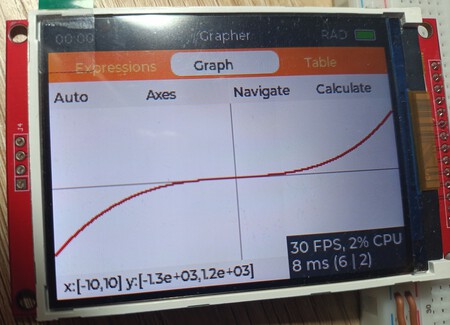
Almería’s Teenager Takes On the Calculator Monopoly
The educational market for calculators has long been dominated by a few major players—Texas Instruments, Casio, and HP. For years, students have been forced to pay high prices for graphing calculators that have seen only minimal technological advancements. A young developer named Juan Ramón, widely known as El-EnderJ, is challenging this status quo with an ambitious open-source project aimed at creating a professional-grade scientific and graphing calculator for just 20 euros.
The Backstory
Reflecting on his own experiences, El-EnderJ recalls starting college in 2003 with a simple Casio calculator. Later, he upgraded to a Texas Instruments TI-86, which cost him 150 euros—a price that hasn’t changed significantly over the years. Fast forward to 2026, new engineering students will be met with the same high costs for newer models. But as El-EnderJ realized, the production costs for these devices are significantly lower, raising questions about the price premium consumers face.
A DIY Calculator: The NeoCalculator
The NeoCalculator project, launched by the 15-year-old from Almería, features an ambitious aim: to break the commercial monopoly by leveraging open-source software. The operating system, called NumOS, runs on the ESP32-S3 microcontroller, which offers capabilities that far surpass older models. Unlike app-based solutions, this project involves creating a physical device that users can assemble and program according to their needs. El-EnderJ even plans for a “factory-sealed version” that complies with educational regulations.
Why This Matters
The educational calculator market is in dire need of disruption. With companies like Texas Instruments and HP controlling the pricing and availability of graphing calculators, students often have limited options. Platforms like GeoGebra and Desmos offer valuable online tools, yet they require devices with internet access, which are typically banned in classrooms. NeoCalculator aims to fill this gap by integrating a powerful CAS engine, enabling advanced mathematical features previously available only in high-end commercial models.
The Technical Innovations
Equipped with a dual-core Xtensa LX7 processor capable of 240 MHz, the ESP32-S3 serves as the brain of the NeoCalculator. This modern chip boasts Wi-Fi and Bluetooth 5 connectivity and is fundamentally more advanced than the outdated Zilog Z80 used in many legacy calculators. The project’s complexity is underscored by its use of the Giac engine—an open-source symbolic calculation tool originally developed at the University of Grenoble—which now finds its way into the NeoCalculator’s framework.
Challenges Ahead
Despite its promise, the NeoCalculator faces significant hurdles. For instance, the connectivity options of the ESP32-S3 pose challenges in exam settings where internet access is prohibited. While the project is still in its early stages, it also lacks an integrated physical keyboard and needs OSHWA certification to ensure transparency and user customizability. El-EnderJ is acutely aware of these limitations but remains optimistic about the future of the project.
Conclusion
Juan Ramón’s NeoCalculator serves as a testament to youthful ingenuity and the potential for change in an industry that has stagnated for far too long. By leveraging open-source technology, he is not just fighting for accessibility but also reimagining what educational tools can be. With continued efforts, the NeoCalculator could become a game changer in the educational sector, proving that quality doesn’t always have to come with a hefty price tag.