
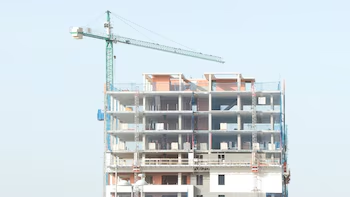
The Housing Crisis in Spain: A 12% Price Increase Forecast for 2026
The Spanish housing market is expected to see a significant price rise of 12% in 2026, according to a recent report by BBVA Research. This upward trend in housing prices comes alongside a projected 7.3% decrease in sales, highlighting a troubling disconnect between supply and demand.
Understanding the Demand-Supply Imbalance
The core issue driving this crisis is not a lack of demand but rather a severe shortage of available homes. The National Statistics Institute (INE) indicates that while an estimated 220,000 new homes are needed in 2026, only 153,000 homes will actually begin construction that year. This consistent annual gap fuels price increases, pushing home ownership further out of reach for many Spanish families.
Long-Term Price Projections
By 2027, BBVA Research anticipates a moderation in the price increase to 5.7%. However, even this adjusted figure will remain unattainable for a considerable portion of the population. The projected housing starts for that year stand at 170,000, still lagging behind the 217,000 homes required. The accumulated housing deficit is expected to reach 807,000 units in 2026, escalating to 885,000 by 2027.
Construction Response to Housing Demand
A closer look at the construction timelines reveals that between 2021 and 2027, only 47% of the housing needs will be met through new constructions. This decline in construction pace is particularly evident in regions experiencing population growth, which also exhibit the greatest housing deficits. Although BBVA Research notes that some moderation in the imbalance is expected, the overall situation remains critical.
Factors Influencing Construction Costs
Various factors contribute to rising construction costs, complicating the market further. A limited supply of qualified labor, stagnating productivity, and potential surges in material costs—partially driven by international trade tensions—could impede or render new projects nonviable. Additionally, foreign purchases of property, encouraged by global economic uncertainties, will maintain a level of demand, but supply restrictions are likely to hinder transaction growth.
Impact of Interest Rates on Home Purchases
Interest rates are projected to stay relatively low, which could facilitate mortgage availability. However, overall demand may wane due to slower job creation and moderate wage growth, limiting many families’ purchasing power.
Evaluating the State Housing Plan
The State Housing Plan has been given recognition for its increased budget allocation and its focus on developing a permanent public housing stock and promoting industrialization in the sector. Despite these positives, the report stresses that these initiatives alone will not be sufficient to eliminate the residential deficit. The effectiveness of the plan hinges on improved coordination among various administrative bodies and the ability to attract private investments.
Conclusion
As Spain navigates through this housing crisis, the forecasted price increases reveal a concerning trend, exacerbated by a consistent lack of supply. Unless significant measures are taken to address the underlying issues affecting construction and availability, the dream of homeownership will remain elusive for many Spanish families. The coming years will be crucial in determining how effectively Spain can bridge the gap between housing demand and supply.