
A Curious Case in Arcugnano: The Fake Roman Amphitheater
For a while, Arcugnano, a small town in the province of Vicenza, could boast a remarkable attraction: a supposedly authentic Roman amphitheater featuring stone steps, columns, statues, and even a pond. This elaborate structure was reportedly built before 393 AD, and its surroundings were said to contain pieces from Greek and Neolithic eras. Behind this unusual discovery was a man known as Franz Von Rosenfranz, who had gained recognition in artistic circles.
The Truth Behind the Illusion
However, this enigmatic scholar was actually named Franco Malosso, and the so-called amphitheater was nothing more than a decorative facade constructed from plaster, concrete, and modern stone blocks.
Trace Back to 2005. To grasp this bizarre tale, one must travel back to 2005 when Malosso claimed to have unearthed remnants of an ancient site in his garden in Arcugnano, exposed by a landslide. Assuming he had stumbled upon a Roman amphitheater, he began excavating with fervor, creating what ultimately became a highly scrutinized story.
Drawn by the allure of Roman architecture, the structure was designated as the “Anfiteatro marittimo berico Porto degli Angeli” and promoted as a point of local pride, attracting visitors eager to discover its alleged historical significance.
From Fascination to Investigation
The site boasted sweeping stone steps, columns, statues, and a pond. Elaborate tales circulated about its origins, suggesting it had housed Julius Caesar or even been a teenage hangout for Juliet Capulet. However, such extravagant claims soon sparked skepticism. By 2016, investigations by the Carabinieri, alongside archaeological scrutiny and satellite imagery, revealed the disconcerting truth: there was no ancient amphitheater—only a modern construction.
The Costly Deception
What was marketed as a Roman relic was nothing more than cleverly crafted decor—modern blocks aged artificially, plaster statues, and fiberglass columns. Despite its superficial charm, the Berico Maritime Amphitheater lacked historical authenticity.
Incredibly, Malosso managed to charge visitors up to 40 euros for entry and convinced local authorities to list the site in promotional tourism materials, leading to an embarrassment that would leave the municipality reeling.
The Consequences of the Hoax
With the charade unraveled, the amphitheater became a symbol of ridicule for Arcugnano. Former mayor Paolo Pellizzari stated, “When the deception was uncovered, we became the laughingstock of Italy.” Despite his legal battles, Malosso’s skillful execution of the scheme did raise eyebrows; most of the construction was completed without permits.
Ultimately, Malosso faced repercussions for his actions. The Supreme Court confirmed a sentence of two years and four months for illegal construction and falsification of artworks. Following the denial of his parole, he is currently serving his time in Ventimiglia prison.
Legacy of the False Amphitheater
The incident raises intriguing questions about how such a deception could flourish to the point of attracting tourists and being featured in official travel guides. Experts believe that the amphitheater’s unlikely location and dubious history should have flagged it as suspicious.
The tale of Franco Malosso and his faux Roman amphitheater serves as a compelling reminder that not everything that glitters, or appears ancient, is gold.
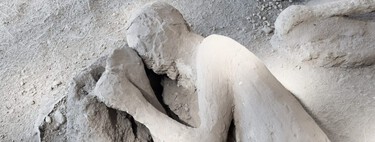
Images | Wikipedia 1 and 2 (The photographs show the amphitheaters of Pompeii and Tarraco)