
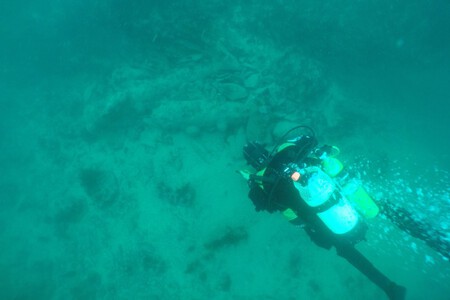
The Discovery of the Dom van Keulen
In the mid-1990s, a group of British divers exploring Salcombe Bay in Devon stumbled upon the remains of a 17th-century ship. While initially the wreck appeared heavily degraded, it concealed a substantial treasure: more than 400 gold coins, jewelry, and ceramics, many of which are now housed in the British Museum. After the initial amazement faded, questions arose—what was the name of this ship, where did it come from, and where was it going?
Unraveling the Mystery
After decades of speculation, archaeologists have finally answered these questions. Through research and archival work, they identified the ship as the Dom van Keulen, a Dutch merchant vessel that set sail from Morocco in the fall of 1633. The ship was en route to the Netherlands when it encountered severe weather off the southern coast of England, ultimately leading to its capsize.
The Role of Historical Research
The revelations about the Dom van Keulen didn’t come from deep-sea diving but rather from careful investigation of historical records. Historian Ian Frield scoured the British National Archives, uncovering invaluable documents detailing the ship’s ill-fated journey. Remarkably, the crew managed to survive the wreck, and according to Dave Parham, a professor at Boston University and one of the book’s editors, “most of the load” was likely recovered shortly after the incident.
Major Cargo Details
The cargo of the Dom van Keulen was impressive, comprising 150 bags of gum arabic, 64 bags of saltpeter, 320 goat skins, and 9,000 Moroccan gold coins (Barbary ducats). While most of this precious cargo was likely extracted shortly after the ship’s demise, over 400 coins remained hidden until the divers found them during their exploration in the 1990s.
Additional Discoveries
The divers’ exploration revealed not just the gold coins, but a variety of artifacts, including a bowl, a pewter spoon, gold jewelry, a fish-shaped weight, seals, ceramics, and even a cast gold piece resembling a finger.
Importance of the Dom van Keulen
The significance of the Dom van Keulen goes beyond its treasure. Identifying the vessel has enriched our understanding of 17th-century maritime trade. It highlights the active trade routes between North Africa and Europe and sheds light on the trade of precious metals. Archaeologists found remains of wood, rope, and dishware, which provide valuable insight into the lifestyle aboard vessels of that era.
Cultural and Economic Context
The findings from the wreck offer a window into the intricate trade dynamics of the 16th and 17th centuries, where Dutch merchants exchanged manufactured goods for gold from West Africa. Some Barbary ducats ultimately served as raw material for minting Dutch coins, reflecting the interconnected nature of European and African economies during that time.
Conclusion
The wreck of the Dom van Keulen has provided maritime archaeologists an unparalleled opportunity to study period artifacts within a dateable context, making it a crucial piece of maritime history. This significant discovery offers future generations a deeper appreciation of the cultural interactions during the burgeoning era of global trade.
Images: Bournemouth University