
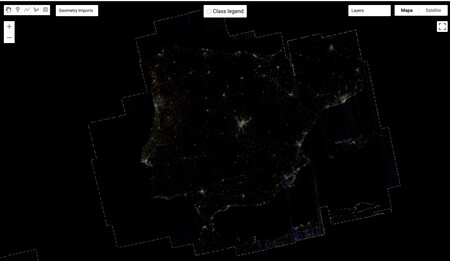
The Evolution of Night Lighting in Rural Spain
In 2023, the advent of the SDGSAT-1 satellite, developed by the Chinese Academy of Sciences, paved the way for groundbreaking research by the RALAN-Map EU project. This collaborative effort between the Complutense University of Madrid and the International Research Center of Big Data for Sustainable Development Goals resulted in the creation of the first high-resolution calibrated map of the Iberian Peninsula, including the Canary Islands, Balearics, and Madeira.
The Impact of Technology on Light Pollution
This innovative cartography, with a remarkable resolution of just 40 meters, enables a detailed view of artificial brightness across regions at night. The findings are startling: many small towns in rural Spain have shifted from their traditional warm lighting to a strikingly bluish hue.
A Notable Change in Rural Lighting
This transition can be attributed to the upgrade of street lighting infrastructure. Many municipalities with populations under 5,000 have replaced old sodium lights with energy-efficient LED streetlights. While this move promises significant energy savings, it comes at an unforeseen cost—exacerbating light pollution and altering the color temperature of outdoor lighting, a change so stark it can be observed from space.
Understanding the Importance of Color Temperature
Both the Complutense University and the SINC Agency emphasize the significance of this mapping endeavor. It provides crucial insights into the environmental and health impacts of light pollution, and outlines new pathways for managing lighting and protecting the night sky. The shift towards bluish light is particularly troubling, as:
- Blue light has a longer wavelength, which spreads more efficiently through the atmosphere, thereby aggravating nighttime glow and compromising visibility for astronomical observations.
- Numerous studies indicate that this type of lighting negatively affects the biological rhythms of both pollinating insects and migratory birds that depend on natural light cues to navigate.
Broader Context of Light Pollution Research
The SDGSAT-1 satellite represents an unprecedented tool for monitoring the United Nations Sustainable Development Goals. Its ability to capture nighttime data allows researchers to assess light pollution with a level of detail previously unattainable. The RALAN-Map project, spearheaded by astrophysicist Alejandro Sánchez de Miguel, investigates the implications of public lighting energy consumption.
Actions for Municipalities
The map is publicly accessible, empowering city councils and urban planners to pinpoint areas dominated by blue light. This data is crucial for making informed decisions on lighting upgrades, particularly in small municipalities surrounded by protected natural spaces. Although prioritizing energy efficiency is vital, the ecological and astronomical consequences of such lighting choices cannot be overlooked.
Conclusion
As rural regions in Spain pivot to energy-efficient lighting solutions, they must also consider the broader ecological and astronomical implications of their choices. Balancing energy savings with the preservation of the night sky will become increasingly vital as we navigate the complexities of modern lighting infrastructure.