
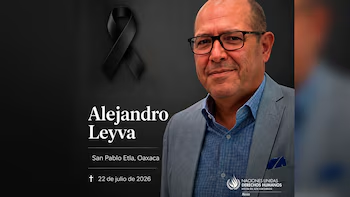
The Brutal Murder of Alejandro Leyva
The recent murder of journalist Alejandro Leyva in San Pablo Etla, Oaxaca, has sparked widespread condemnation, notably from the United Nations High Commissioner for Human Rights (UN Human Rights). This tragic event adds to the alarming statistic of six documented murders of journalists in Mexico in just 2026. The UN’s statement emphasized the urgent need to reinforce the protection of at-risk communicators.
Details Surrounding the Murder
Leyva, recognized for his political commentary and critical stance towards local governance, was shot dead by armed assailants in the Esmeralda subdivision. Eyewitness reports indicated the attack was sudden and lethal; he succumbed to his injuries on the scene. Following the homicide, local authorities, including the State Investigation Agency, initiated investigative procedures to secure evidence and clarify the circumstances surrounding the murder.
Call for Action and Solidarity
Condemning the violence, the UN expressed solidarity with Leyva’s family and the broader journalistic community. They stressed the importance of safeguarding freedom of expression and highlighted the responsibility of authorities to prevent aggression against those who voice dissenting opinions. Their call for the Federal Attorney General’s Office (FGR) to take over the investigation aims to ensure justice for Leyva and his colleagues.
Leyva’s Legacy and Recent Controversies
Francisco Alejandro Leyva Aguilar was not just a journalist; he was a passionate political analyst and a former director of the Oaxacan Radio and Television Corporation (CORTV). His influential column, “El Zumbido del Moscardón,” tackled vital issues such as public administration and security in Oaxaca. His final post was a pointed critique of state leadership, where he expressed concerns about judicial harassment directed toward him and warned about potential threats to his safety.
Allegations Against Local Leadership
In a twist leading up to his death, Leyva publicly accused the governor of Oaxaca, Salomón Jara Cruz, of orchestrating his harassment and suggested ties to organized crime, specifically the Sinaloa Cartel. He claimed that these pressures were an attempt to silence him for his investigative work. Leyva’s challenges to the state’s authority culminated in a video that circulated days before his murder, wherein he detailed serious allegations against political figures.
Official Reactions and Next Steps
Governor Jara condemned the crime and underscored that differences of opinion should never result in violence. He called for a coordinated investigation between the state prosecutor’s office and the FGR. The hope is to exhaust every avenue of inquiry to bring those responsible for Leyva’s murder to justice.
Conclusion
The murder of Alejandro Leyva starkly illustrates the perilous environment for journalists in Mexico, where freedom of expression is often jeopardized. As efforts to pursue justice unfold, Leyva’s example underlines the necessity for greater protections for journalists across the nation. The UN’s intervention reaffirms the dire need for proactive measures to protect those who dare to speak the truth.