
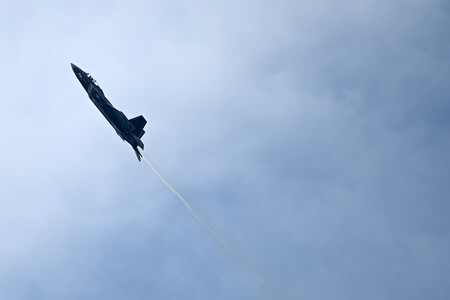
The Journey of the KF-21 Fighter Jet
South Korea has been striving for 25 years to create a fighter jet developed entirely on its own. This ambition is finally taking shape, as the first production KF-21 has officially left the factory and is set to fly for the first time this month. Delivery to the South Korean Air Force is scheduled for September, marking a significant milestone in overcoming prototype stages and moving towards military operational service.
Recent Milestones in Development
A series of significant benchmarks in recent months illustrates the advancement of the KF-21 program. KAI showcased the first production unit on March 25, with its inaugural flight occurring on April 15. Following rigorous testing, the airplane successfully passed its final combat fitness evaluation on May 7. On June 15, the KF-21 received its initial type certification, indicating that it meets government airworthiness and safety standards. The next steps involve formal acceptance and delivery to the South Korean operator.
Historical Background of the KF-21 Project
The KF-21 project began taking shape in March 2001, when then-President Kim Dae-jung sought to develop an advanced fighter jet. Overcoming financial challenges and feasibility studies delayed progress for years. A major breakthrough occurred in December 2015 when DAPA, the procurement agency, signed a system development contract with KAI. Indonesia joined as a partner, contributing approximately 20% of the cost in exchange for technological benefits and participation in production.
Investment and Cost Analysis
Transforming the KF-21 project into a functioning fleet has been a costly endeavor. The development costs are estimated at around 8.8 trillion won (approximately 5.24 billion euros). The initial plan includes acquiring 40 units, along with weapons and associated costs, totaling about 7.92 trillion won (nearly 4.72 billion euros). This budget encompasses not just the aircraft, but also the engines, training, spare parts, documentation, and logistical support.
Technical Capabilities of the KF-21
The South Korean Air Force will be receiving a 4.5-generation twin-engine fighter, which is not classified as fifth-generation stealth like the F-35. The KF-21 can reach speeds of approximately Mach 1.8 and carry up to 7.7 tons of weapons. Its advanced systems include an AESA radar, infrared sensor, and electronic warfare capabilities. Initially, the units will focus on air-to-air missions, with further enhancements for air-to-ground operations planned for later iterations.
Domestic Industrial Impact
The industrial significance of the KF-21 is highlighted by the roles of various South Korean companies. KAI leads in design and assembly, while Hanwha Systems and LIG Nex1 supply key avionics and radar systems. Additionally, Hanwha Aerospace produces components and assembles the F414-400K engines from GE Aerospace. Since the prototype’s first flight on July 19, 2022, the program has logged around 1,600 flights and approximately 13,000 test conditions without incidents.
Future of South Korea’s Air Force
The introduction of the KF-21 will not eliminate South Korea’s reliance on foreign fighters. Plans are in place for another 20 US-made F-35As, expecting to commence deliveries in 2027. While South Korea’s fleet will feature diverse platforms, the KF-21 represents a significant step forward, allowing the nation to take control over the design, production, and maintenance of its military aircraft. Although it will not completely eradicate external dependencies, it marks a considerable reduction in them.
Images | Government of Korea/Ministry of Defense