
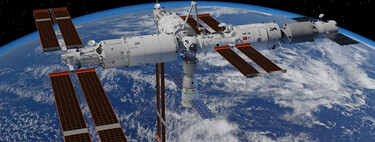
China has been intensely focused on the new space race, pushing the boundaries of what’s possible in extraterrestrial science. Beyond testing round-trip rockets to reduce mission costs and fill low Earth orbit with various satellites—both military and commercial—China is leveraging its Tiangong space station for revolutionary research.
In one of the latest missions involving the Tianzhou-10 cargo spacecraft, a noteworthy shipment included embryos from zebrafish, mice, and artificial human structures. This attempt aims to answer a critical question: is it possible to have babies in space? Unfortunately, the initial results from previous experiments are less than promising for the prospect of space reproduction.
China’s exploration of reproduction in space isn’t a new endeavor. Earlier this year, a mouse was sent to the space station to investigate whether radiation and microgravity would impact offspring. Of the nine babies born, six survived, prompting further research, now shifting focus to artificial human embryos.
Complexities of Human Reproduction in Space
While visions of space-borne families may seem like something out of science fiction, the “artificial humans” mentioned are not fully developed organisms capable of pregnancy. Instead, they consist of structures made from stem cells that mimic the early stages of human development.
The latest shipment to Tiangong contained embryos at approximately 14 to 21 days post-fertilization—a crucial phase when organs begin to form. This period is particularly vulnerable to potential anomalies caused by space radiation. However, earlier studies have begun to paint a bleak picture.
As reported by the South China Morning Post, researchers from the Shanghai Institute of Technical Physics and Tsinghua University discovered that the cells sent on the Tianzhou-6 mission did not grow or develop as they would have on Earth.
The experiments revealed a concerning decline in the success rate of producing germ cells—dropping nearly 50%—and sperm precursor cells multiplied over 25% more slowly. The culprits? Microgravity and cosmic radiation appear to be detrimental factors affecting cellular functionality.
This is not the first time China has conducted this type of research. In 2023, a set of automated cell cultures was studied aboard the Tiangong station. Researchers found that the success rate of these specialized stem cells, derived from pluripotent stem cells, was alarmingly reduced upon return to Earth—only achieving a growth rate between 2% and 6%, compared to 6% to 15% for those on Earth.

The harsh conditions of outer space significantly hinder the conversion of primordial cells into functional eggs or sperm. However, a silver lining exists: the activity and quantity of human-induced ovarian follicles showed minimal decline, suggesting that the short-term impacts of space radiation on germ cells might be limited.
Despite recent setbacks, researchers remain committed to exploring this frontier. With potential long-duration missions to Mars and beyond on the horizon, understanding the feasibility of pregnancies in space is a pressing concern worthy of continued investigation. The results from ongoing studies aboard the Tianzhou-10 will be crucial in this pioneering field.
As humanity inches closer to making long-term space habitation a reality, the question of how reproduction and family planning will fit into this vision remains a significant challenge.