
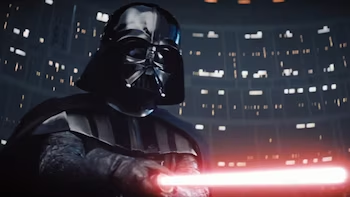
The Origin of Darth Vader’s Helmet: A Design Born from Necessity
Darth Vader, one of the most iconic villains in cinematic history, owes much of his unforgettable look to a practical need identified during the early stages of the “Star Wars” script. Ralph McQuarrie, the visionary concept artist, recognized that the character must be able to survive in the vacuum of space, leading to the design of his distinctive helmet and mask.
A Script Problem
In the original script for “Star Wars,” written by George Lucas, there was a pivotal scene where Darth Vader needed to traverse space from his own ship to a Rebel vessel. This presented a significant challenge: how could a character move seamlessly from one ship to another in the unforgiving environment of space? McQuarrie proposed that Vader should wear a vacuum suit, a suggestion that would ultimately define the aesthetic we now recognize.
McQuarrie’s Vision
Ralph McQuarrie’s journey into the “Star Wars” universe began long before the film’s release. He was known for creating space art for CBS during the Apollo missions, which piqued Lucas’s interest. In 1972, Lucas approached McQuarrie with a concept for a new science fiction film, which was still untitled. The seeds for what would become Darth Vader’s visual identity were sown during their initial discussion.
As McQuarrie later recounted, Lucas envisioned a character that resembled a “dark guy with a black cape and a big helmet, like a Japanese warrior.” However, this idea clashed with the needs of the script.
The Transformation
Realizing that Vader needed to function in a vacuum, McQuarrie suggested incorporating a breathing apparatus into the design. This practical solution transformed Vader’s frightening silhouette into the unforgettable image associated with the character. Lucas’s approval of this concept solidified his look, which included not just the imposing helmet but also the essential mask for respiration.
A Lasting Impact
Although the specific sequence where Vader would enter the Rebel ship didn’t make the final cut of the film, the design choices remained integral to the character’s identity. The need for a vacuum suit and respiratory device became central elements that shaped Vader’s persona in the franchise.
McQuarrie’s influence on the visual aesthetic of “Star Wars” is profound. His designs helped create some of the most recognizable traits within the series, making characters come alive in a way that resonated with audiences around the world.
Conclusion
The genesis of Darth Vader’s helmet demonstrates how practical narrative needs can drive creative design. From McQuarrie’s initial drawings to the character’s iconic status, the journey of Vader’s look is a testament to the power of collaboration in storytelling. The helmet, now synonymous with evil and power in cinema, has endured as an emblem of fear, making it one of the most recognizable symbols in popular culture. Through this iterative design process, what started as a simple script requirement evolved into a hallmark of cinematic history.