
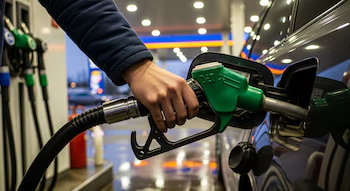
The Deteriorating Relationship Between Salaries and Gasoline Prices
In November 2023, a registered private salary was sufficient to fill 26.3 tanks of 50 liters of super gasoline. By July 2026, this amount had significantly decreased to 16.4 tanks. This notable decline, a loss of almost ten tanks, is not attributed to a single factor but rather a complex equation involving multiple elements.
Factors Affecting Gasoline Prices
The current issue arises from the deregulation of the energy sector, leading to greater price flexibility for oil companies, alongside fuel taxes that keep increasing. Meanwhile, wages have lagged behind the soaring energy inflation rates. Coupled with geopolitical tensions, such as the ongoing conflict in the Middle East, which initially caused crude oil prices to soar, the situation presents a challenging landscape for consumers seeking affordable gasoline.
Statistical Insights from Recent Reports
Recent data from the Argentina Grande Institute (IAG) underscores these challenges, suggesting that while registered private salaries grew by 311% from November 2023 to July 2026, the price of gasoline skyrocketed by 558% during the same span. Such statistics underscore a significant disparity that highlights the erosion of purchasing power regarding fuel.
The Impact of the Middle East Conflict
The conflict between the USA and Iran has notably influenced gasoline affordability. Prior to the escalation in February 2026, median salaries enabled the purchase of 19.4 tanks, while by July 2026, this number had fallen to 16.4 tanks, reflecting a sharp decline in the span of just five months.
Gasoline prices have surged by 27.2% since the onset of military tensions, further exacerbating the difficulties faced by consumers.
YPF’s Buffer Mechanism and Market Response
During the height of the conflict, fuel prices at the pump did not mirror international crude oil rates due to a buffer mechanism initiated by YPF, which controls over 55% of the retail fuel market. This initiative intended to stabilize prices amidst drastic fluctuations in crude prices, aiming to mitigate inflationary pressure.
This buffering strategy consisted of two phases: the first lasting 45 days and the second extending for 30 days, which allowed only a 1% increase in fuel prices initially. As a result, the price of super gasoline remained around $2,000 per liter, despite international prices surpassing local rates.
Future Projections and Consumer Impact
As the geopolitical situation evolves and international oil prices fluctuate, consumers are left wondering when a reduction in fuel prices might materialize. Analysts suggest that a downward adjustment is likely in September; however, this is contingent upon the continued decrease in oil barrel prices.
According to expert projections, adapting fuel prices to align with lower crude rates could necessitate an approximate 16% decline. This adjustment could potentially impact the Consumer Price Index (CPI) significantly, reducing it by around 0.65 percentage points.
Conclusion
The intricate relationship between gasoline prices and salaries in Argentina reflects broader economic vulnerabilities. With the rise in costs outpacing wage growth and geopolitical uncertainties compounding the issue, consumers are caught in a precarious balance that demands attention and adaptive strategies from policymakers.