
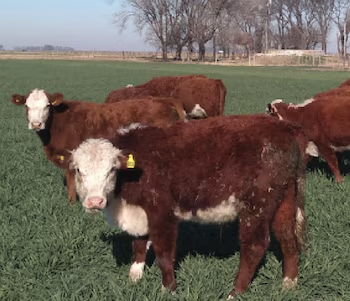
The Dilemma of the Extra Kilo: Heavier Steers Without Sacrificing Efficiency
The Genetic Impact of Size on Cattle
A recent study by INTA Cuenca del Salado sheds light on the implications of breeding heavier steers. While larger animals meet the growing demand from international markets, the research indicates that this pursuit can compromise both reproductive efficiency and profitability. In examining the genetic pathways to produce larger animals, researchers have drawn significant conclusions about the impact of size on the entire cattle lifecycle.
Nutritional Requirements and Reproductive Efficiency
Utilizing larger bulls results in heavier steers; however, this practice leads to cows with greater nutritional needs. According to Sebastián López Valiente, an INTA researcher, failing to meet these nutritional demands negatively affects the precocity and reproductive efficiency of future mothers. Cows that are larger require more calories, which can strain resources and impact overall farm productivity.
The Numbers Speak Volumes
For every additional 100 kilos added to a cow’s weight, daily dry matter consumption increases by approximately 1.7 kilos. Despite the increased weight of calves at weaning, which can range from 10.1 to 20.6 kilos, the efficiency of weight gain becomes a cause for concern. Larger cows wean proportionally fewer kilos relative to their own weight and require significantly more forage to produce each additional kilo of calf. López Valiente emphasizes that the relationship between cow size and productive efficiency is not linear, which complicates the equation for producers.
The Cost of Growth
Another cost associated with larger cows is the extended days needed for steers to reach slaughter weight. While heavier steers are an attractive market option, they necessitate more days of fattening, elevating feed costs throughout their lifecycle. As producers strive to meet market demands, they must carefully consider these additional expenses.
Striking a Balance: Research and Solutions
In an effort to provide clarity amidst these challenges, INTA has initiated trials involving different biotypes in full-cycle systems. The goal is to ascertain how large animals can be bred without jeopardizing both fertility and pastoral productivity. López Valiente points out that the focus should not solely be on maximizing animal size but rather on identifying biotypes that strike a balance between slaughter weight, productive efficiency, and fertility.
Genetic Evaluations as a Solution
One significant tool available in the agricultural landscape is genetic evaluations. These assessments allow for the identification of animals with accelerated growth curves, achieving substantial weight gain by 18 months without translating this increase to the adult size of the cows. This approach is considered critical for maintaining reproductive efficiency while adapting to environmental challenges.
Conclusion: Navigating Market Demands and Resources
The final challenge, as encapsulated by López Valiente, lies in harmonizing the demands of the market with available forage resources while ensuring profitability. The selection of genetics that aligns with the specific needs of each farming system is essential. By focusing on balanced traits rather than sheer size, producers can potentially maintain reproductive efficiency and economic viability in an evolving marketplace.