
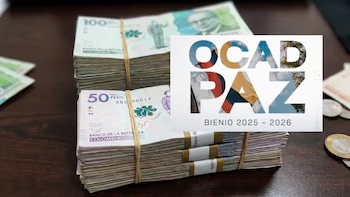
New Allegations Against the National Planning Department Over Ocad Paz Resources
The National Planning Department (DNP) finds itself under intense scrutiny following the filing of three new complaints aimed at investigating irregularities in the management of projects funded by the Collegiate Body for Administration and Decision Peace (Ocad Paz). This body is responsible for defining investment projects financed through the General Royalties System (SGR), playing a critical role in the evaluation, approval, and prioritization of financing for such initiatives.
Allegations of Corruption and Administrative Malfeasance
The new complaints suggest a troubling pattern of administrative blockages, unjustified delays, and potential solicitation for illicit payments in the processing of initiatives meant for municipalities affected by armed conflict. During the DNP’s third call for applications between 2025 and 2026, an estimated budget of 6.6 billion pesos was made available, which has drawn attention to the management and potential mishandling of these funds.
The allegations were notably filed towards the end of the Petro administration and aim to scrutinize the distribution and utilization of resources intended for peace-building initiatives as part of the Total Peace policy in Colombia. According to documents obtained by Infobae Colombia, various projects faced repeated administrative setbacks and mandatory returns, creating undue pressure on mayors and governors tasked with presenting viable proposals for accessing SGR funds.
Key Individuals and Involved Parties
Among those mentioned in the complaints is Diana Margarita López Riaño, the deputy director of Project Management at the DNP, who is responsible for verifying project requirements. This raises significant questions regarding the integrity of oversight functions and the execution of public resources. Other implicated individuals include officials, contractors, and intermediaries, with the control bodies tasked with determining disciplinary, fiscal, or criminal responsibilities.
In a particularly troubling development, reports indicate that some officials suggested “alternative methods” to streamline procedural bottlenecks, implying a potential culture of unofficial payments for expediting services.
Specific Projects Under Scrutiny
The Protectores de la Paz oversight agency raised serious concerns about a project focusing on rehabilitating urban roads in Ricaurte, Nariño, which has an allocated budget of approximately 5.1 billion pesos. DNP verification records flagged cost overruns towards the end of 2025, but these discrepancies subsequently vanished, leading to suspicions about revised favorable opinions from reviewers.
Furthermore, a housing project aimed at ethnic communities in Orito, Putumayo, worth around 7.5 billion pesos, has been criticized for inconsistencies in technical concepts and official communications. Another project concerning productive systems in Putumayo was found to be over 52% underfunded due to budgeting errors, highlighting systemic financial mismanagement.
Wider Implications and Criminal Allegations
At least three oversight offices—Citizen Network for Royalty Control, Royalties Guardians, and Oversight for Royalties Transparency—have filed disciplinary complaints with the Attorney General against López Riaño. The allegations involve wheeling and dealing via procedural failures and undue pressure tactics directed at mayors and governors, proposing informal monetary solutions to expedite access to resources.
The complaints suggest severe criminal implications, including allegations of concussion and influence peddling, and warn of a clandestine “feasibility market.” This troubling assertion posits that technical approvals for projects may inappropriately depend on private payments rather than strict adherence to legal requirements.
Conclusion: Calls for Transparency and Accountability
As these allegations unfold, there is an urgent need for comprehensive investigations into the management of Ocad Paz resources. The situation raises significant concerns about the potential misuse of funds designated for promoting peace and development in Colombia’s most vulnerable regions. Ensuring accountability and transparency is vital for restoring public trust and achieving the intended benefits of peace initiatives.