
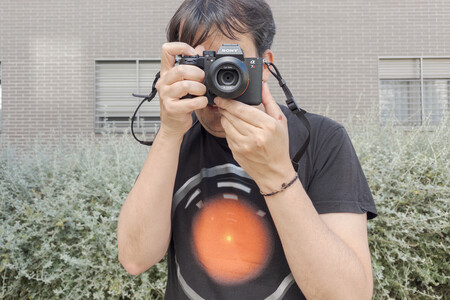
In the realm of Sony’s mirrorless cameras, the ILCE 7 series stands out with its two branches. This time, we’ve tested the latest in the R (resolution) line—the Sony A7R VI, a studio camera that can confidently hit the streets.
Equipped with a 66.8 MP sensor and the Exmor RS BIONZ XR2 processor, it can achieve 30 FPS and record video in 8K 4:2:2 at 10 bits. This quality is unmatched by many cameras and requires high-end computers to handle such large files without lag.
While we are facing one of the best cameras on the market, I found myself underwhelmed. It has every feature we could desire from a camera, yet lacks that exhilarating feeling I’ve experienced with previous models from this brand and series. Perhaps we’ve reached the limits of technology… who knows.
The specifications are impressive, from a dynamic range of 16 stops to an advanced autofocus system. The standout feature is the stacked sensor, which we will discuss later, along with a new battery that promises better results than its predecessor. Yet, something still feels off.
Technical Specifications of the Sony A7R VI
It feels like just yesterday that the Sony A7R V was announced, appearing in late 2022. The four years since have brought significant improvements, the most notable being the 66.8 MP stacked sensor. The R series focuses not only on resolution but also on high-speed performance.
Sony A7R VI | |
|---|---|
Sensor | CMOS Exmor RS full-frame 35 mm 72.6 megapixels (total) 66.8 megapixels (effective) 55.8 megapixels (video) |
Processor | BIONZ XR2 |
Viewfinder | 1.6 cm OLED Quad-XGA OLED Approximately 9.44 million dots |
LCD Screen | 8 cm TFT Touchscreen Approximately 2.1 million dots Adjustable angle |
ISO Sensitivity | 100-32000 |
Continuous Shooting | 30 FPS |
Storage | Two SD card slots (UHS-I/II compatible) / CFexpress Type A card |
Image Formats | RAW, JPEG, HEIF (4:2:0 / 4:2:2), RAW & JPEG, RAW & HEIF |
Max Video Resolution | 7680 x 4320 (4:2:0, 10 bits) (approx.): 29.97p (400 Mbps / 200 Mbps) |
Wireless Connectivity | Wi-Fi 6 / 6E (802.11ax) Triple band (2.4 GHz / 5 GHz / 6 GHz) Bluetooth 5.3 FTP Transfer function (wired LAN [USB-LAN], USB tethering, Wi-Fi) Smartphone sending Remote control via smartphone Remote capture |
Dimensions | Approx. 132.7 x 96.9 x 82.9 mm Approx. 132.7 x 96.9 x 72.8 mm (from the grip to the monitor) |
Weight (with cards and battery) | Approx. 713 grams |
Launch Price (body only) |
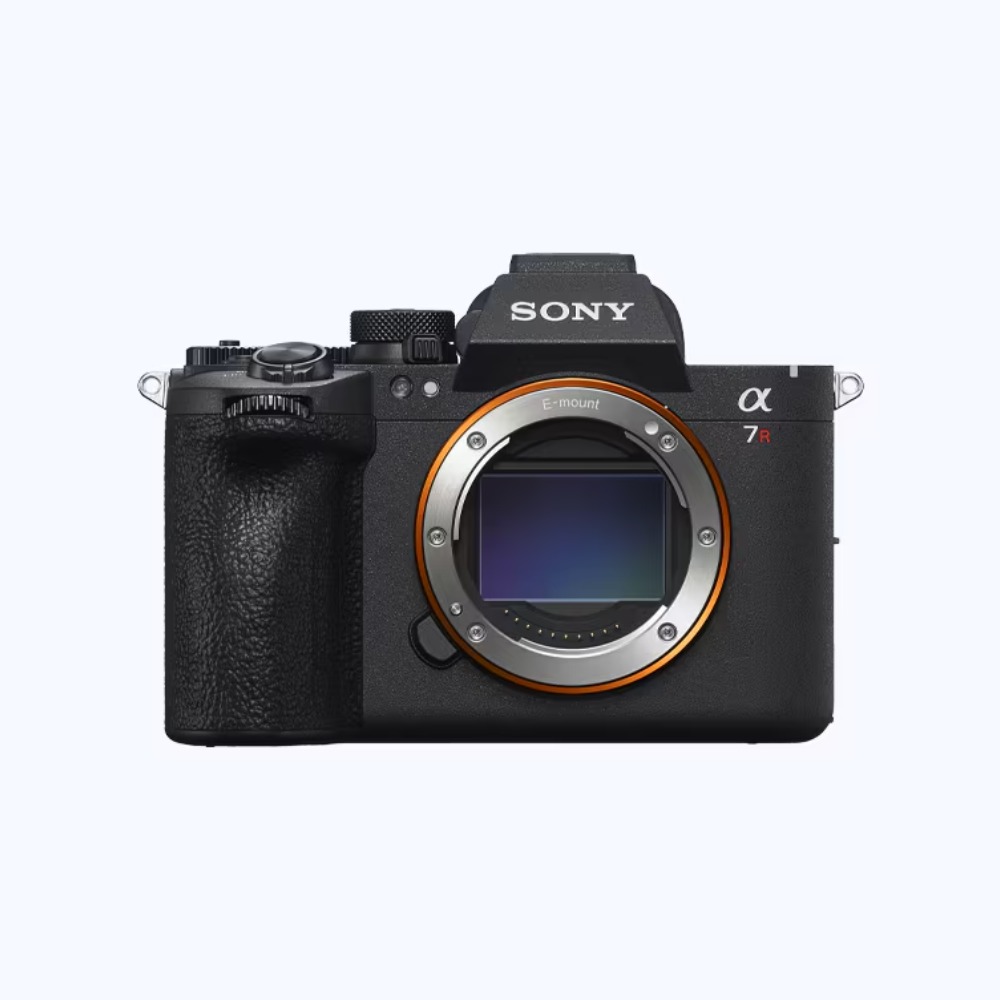
Cámara HR full-frame α7R VI
Price may vary. We earn a commission from these links.
All these features far exceed those of the previous model. For instance, the viewfinder retains the same resolution but has three times the brightness and a color space extending to DCI-P3, surpassing the typical sRGB range. However, keep reading to discover more insights.
Sony A7R VI: The Most Advanced Camera?
Photographers often purchase an R-series camera targeting medium-format results. They desire millions of pixels to capture every detail. Previously, this came with the caveat of slower processing speeds.

ISO 25600 1/3200 f6.7
This is why they’ve developed the new stacked sensor, integrating memory and circuitry behind the pixel matrix. What does this mean? A higher burst speed of up to 30 FPS, without frame flickering; and a solution to the rolling shutter effect, enabling technologies previously seen only in lower-resolution sensors, such as pre-capture.
AI technologies are present to enhance data processing efficiency, reducing heat generation from handling extensive information. This supports the autofocus system, now capable of 60 calculations per second.

ISO 100 1/125 f7.1
Design and Ergonomics
The design closely resembles its predecessor, with some subtle differences primarily due to the new, bulkier NP-SA100 battery, necessitating a redesign.
The body is made of magnesium alloy, with buttons and seals protected against dust and moisture. While it may not withstand heavy rain, I can attest to its durability when properly protected.
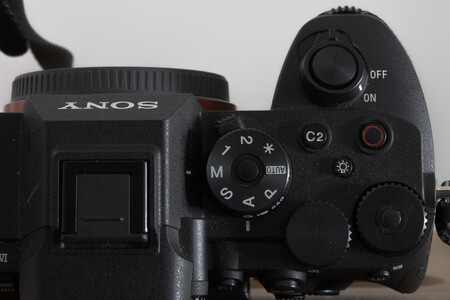
A notable change is the larger grip, which improves ease of handling and stability while shooting. This is a significant upgrade from the earlier, more minimalistic models.
Furthermore, all buttons on the rear panel are backlit, ideal for working in low-light conditions. The exposure mode dial has tactile features for easy recognition by touch.
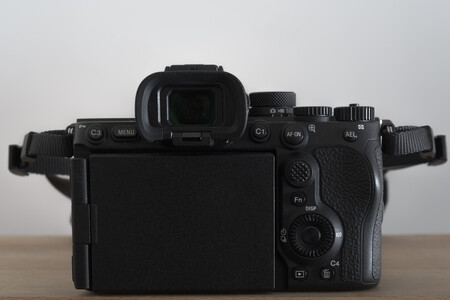
This camera feels secure in hand, akin to a classic SLR designed by the legendary Luigi Colani, allowing for stable shots whether using a wide-angle or a powerful telephoto lens.

Don’t forget to replace the strap upon purchase, as the stock straps are among the least comfortable on the market due to their rigidity and short length.
The interface follows the Sony lineage, and while we are familiar with these menus, I wish they’d opt for a simpler menu system, akin to Leica’s.
Screen, Viewfinder, and Battery Life
Regarding the screen and viewfinder, there are few updates. In an ideal world, all Sony models would feature the same high-resolution viewfinder. It’s exquisite.
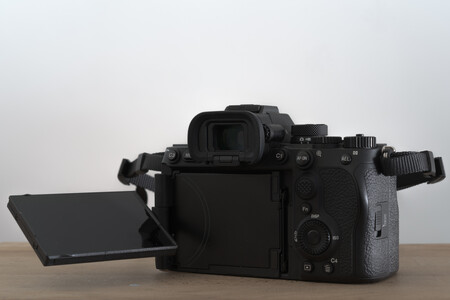
Maintaining the four-axis vari-angle screen is a practical feature for capturing video in impossible positions. The screen is 3.2 inches with 2.1 million pixels.
The highlight is the viewfinder, featuring 9.44 MP and a broader color space in DCI-P3 compared to the sRGB spectrum found in most cameras on the market.
The camera’s grip allows for a firm hold, providing a unique sense of security. It’s a welcome evolution back to designs from the late ’80s.
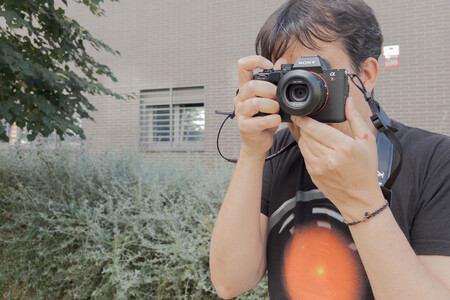
Next, we arrive at a major change: the new NP-SA100 battery. The previous NP-FZ100 is not compatible with this model, necessitating additional purchases. However, this new battery offers a 30% increase in capacity, allowing for up to 700 official shots.
During my tests, I had to recharge the battery five times for about 2000 shots, averaging 400 per charge. Perhaps a firmware update could optimize this.
The Autofocus System is Flawless
Despite the speed provided by the stacked sensor, it’s not designed for action photography. I tested it during volleyball matches, which are faster and more unpredictable than football.
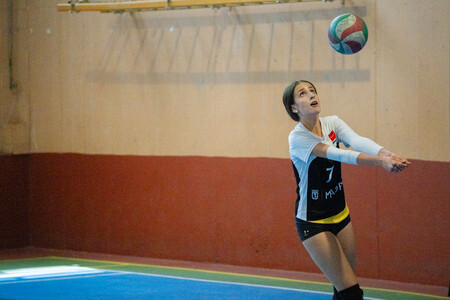
ISO 25600 1/3200 f5
This autofocus system has a maximum of 759 phase detection points covering 94% of the image area, active for both photos and video. Interestingly, the manual mentions only 25 contrast detection points when using APS-C designed lenses.
With AI support, it makes up to 60 AF calculations per second, matching the autofocus systems of its high-end siblings.

ISO 100 1/40 f8
This information holds true only when using high-end, bright lenses. I faced challenges acquiring focus during a match with my Canon EF 75-300 mm f/4-5.6 first-generation lens using the Sigma MC-11 adapter. I assure you the settings were optimal, as instructed by Sony ambassadors.
However, in fieldwork and studio settings, the performance is astounding, even in low-light scenarios. It’s remarkable how it maintains focus without faltering. Using premium lenses complements the precision.
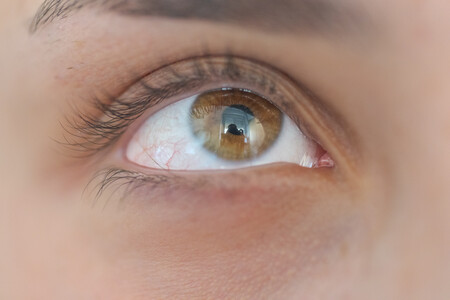
ISO 4000 1/100 f2.8
Aside from the contrast detection points, the autofocus system resembles that of the highly acclaimed Sony A7 V. However, using premium lenses is essential to fully exploit this model’s autofocus capabilities.
Image Quality of the Sony A7R VI: A Studio Camera
The properties align with those of the Sony A7 V but boast a 66.8 MP sensor. With more pixels crammed into the same space, logically, the final output should be lesser.
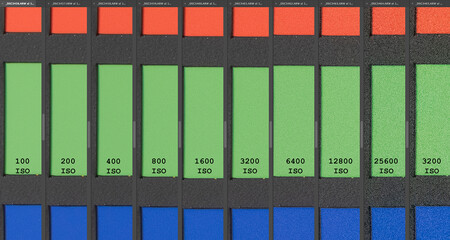
In tests, the camera is capped at ISO 32,000, compared to the 51,200 ISO of the Sony A7 V. In this regard, it falls short.
Noise at 25,600 ISO is evident, compelling us to resort to our preferred software’s AI to reduce it. While not surprising, I honestly expected more.
Between ISO 100 and 6400, the camera shines and confirms its status as a studio and tripod camera. Image quality, dynamic range, and color are impeccable in controlled settings.
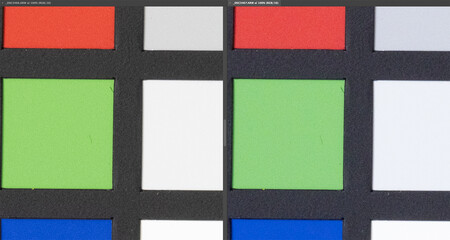
ISO-less test passed. Left: ISO 100 underexposed five stops; Right: ISO 3200 well-exposed
A curiosity to note is the ISO-less sensor. This allows for exposure errors while maintaining similar noise levels, which is beneficial if a flash fails to fire during a shoot.
The Video Capabilities of the Sony A7R VI
One of the major benefits of the stacked sensor is improved video recording, offering 8K@30 FPS and 4K@120 FPS capabilities.
I’m left wondering if photographers purchasing this model will ever shoot in 8K, yet there might still be a search for hybrid models…
The stacked sensor allows for a reading speed 5.6 times faster than its predecessor, effectively mitigating rolling shutter issues and enhancing real-time autofocus to prevent focus loss, although proficient videographers still favor manual work.
It boasts professional features but does not allow for native RAW recording. Instead, it continues using XAVC HS (MPEG-H HEVC/H.265) and XAVC S (MPEG-4 AVC/H.264) formats with 10-bit 4:2:2 sampling.
Additionally, it supports popular image profiles like S-Log3 and S-Cinetone to enhance the dynamic range and tailor the footage for intricate post-editing.
Sony A7R VI: Xataka’s Opinion
The key lies in honesty when evaluating a camera. After testing it under various lighting conditions, it’s clear this is not a camera for everyone.
It’s designed for photographers primarily working in studios and requires a powerful computer to handle files over 70 MB, soaring to about 380 MB for 16-bit files.
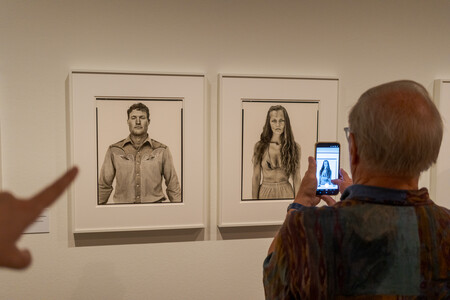
ISO 1000 1/40 f3.5
If this camera aims to be considered an alternative against medium-format options, why not adopt a true 16-bit RAW format? This would make a bold statement.
The autofocus system is excellent but undoubtedly more agile in the Sony A7 V. I understand this is a studio camera, yet its performance is commendable in various situations. However, it certainly feels more ‘posh’ and lacks a bit of ‘street cred’.
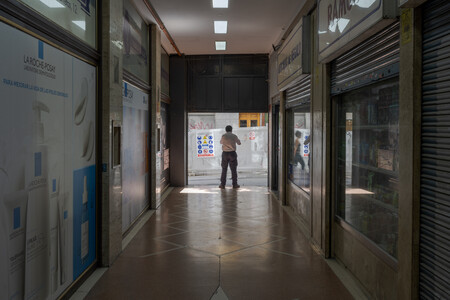
ISO 100 1/20 f9
If you have a generous budget for top-quality lenses, a capable computer, and ample storage, this camera could be perfect for you. It’s not accessible to many, and within Sony’s lineup, there are much more balanced options, such as the aforementioned Sony A7 V.
It undoubtedly ranks as Sony’s most advanced camera. Yet, like many others, it left me feeling rather indifferent. I found it to be a technological marvel, but without that emotional spark, captivating photographs remain elusive.
Cámara HR full-frame α7R VI
Price may vary. We earn a commission from these links.
Images | Xataka
In Xataka | Sony A7R V, analysis: the grand introduction of AI in Sony’s top camera.
This device was provided for testing by Sony. You can consult how we do reviews in Xataka and our corporate relationships policy.